 Login with Google
 Signin with Apple
Cross-Population Comparison
Bryan Matott , India Jun 13, 2026
One of the most difficult challenges in human performance research is comparing results across different populations.
Fitness data is collected everywhere. Schools, sports programs, military organizations, health systems, wearable devices, and fitness applications all generate enormous amounts of information. Yet meaningful comparison remains surprisingly difficult because the underlying measurements are often different.
Different tests measure different things. Different organizations use different standards. Different countries collect different types of data. Even when two groups appear to be measuring the same concept, the methods used may not be comparable.
As a result, many discussions about population fitness rely on assumptions rather than direct comparison.
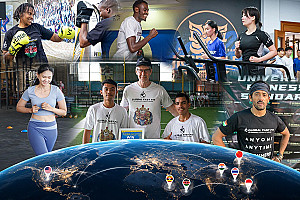
Cross-Population Comparison is one of the core objectives of the Global Fast Fit project.
The idea is straightforward: if individuals from different populations are evaluated using the same benchmark, under the same rules, with the same verification requirements, meaningful comparison becomes possible.
This principle was one of the primary reasons the GFF Standard was developed. Rather than relying on country-specific testing protocols or organization-specific fitness assessments, participants are evaluated using a common benchmark that can be performed across diverse environments. The goal is not to eliminate differences between populations, but to create a common reference point through which those differences can be studied.
Cross-population comparison is not limited to geography. The same methodology can be applied to age groups, genders, occupations, training backgrounds, and other population segments. A benchmark becomes more valuable when it can support comparison across multiple dimensions rather than within a single group.
This capability has become increasingly important as the Global Fast Fit dataset has expanded. Thousands of benchmark submissions and exercise records collected across multiple countries have created opportunities to examine performance patterns that would be difficult to observe within smaller or isolated datasets. Questions about how fitness varies by age, training history, location, or demographic group become easier to explore when all participants are measured against a common standard.
The broader Human Performance Intelligence (HPI) initiative was built in part to support this type of analysis. While individual benchmark results provide value on their own, larger datasets make it possible to study trends, distributions, and relationships across populations. Cross-population comparison transforms isolated fitness tests into a growing body of comparative human performance data.
The objective is not to declare one population stronger, healthier, or more capable than another. Human performance is complex and influenced by many factors. Instead, the goal is to provide a framework through which meaningful differences can be measured, studied, and understood.
In many fields, progress begins with the ability to compare. The same is true for human performance. Without common benchmarks, comparisons become difficult. Without comparison, patterns remain hidden.
Cross-Population Comparison is therefore more than a statistical exercise. It is one of the foundational reasons global benchmarks exist in the first place. By establishing a common standard and a common methodology, Global Fast Fit seeks to make meaningful comparison possible across the populations that make up the world.
Human Performance Index (HPI)
Bryan Matott , India Jun 13, 2026
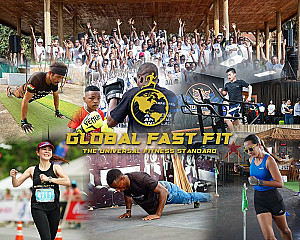
Most fitness systems measure only a small portion of human performance. A running test may measure cardiovascular capacity. A strength test may measure muscular performance. A wearable device may measure activity levels. A health assessment may focus on biomarkers. Each provides useful information, but each captures only a fragment of the larger picture.
Human Performance Index (HPI) was developed to address this challenge.
HPI is an effort to create a more comprehensive view of human performance by integrating multiple forms of evidence into a single framework. Rather than focusing on one exercise, one test, or one device, HPI seeks to understand how different measurements relate to one another and what they collectively reveal about an individual's capabilities.
The idea emerged from a simple observation: human performance is multidimensional. A person may possess excellent cardiovascular fitness but limited strength. Another may demonstrate impressive strength while struggling with mobility or endurance. Looking at a single metric often produces an incomplete understanding of overall performance.
The Global Fast Fit benchmark became one of the foundational components of HPI because it provides a standardized, verifiable measure of functional fitness. However, HPI extends beyond GFF alone. It is designed to incorporate additional forms of performance evidence, including exercise records, movement assessments, activity data, and other measurable indicators of physical capability.
A key objective of HPI is creating comparability. Human performance data is often fragmented across devices, applications, fitness programs, and health systems. Measurements may be collected using different standards, making meaningful comparison difficult. HPI seeks to provide a framework through which diverse performance data can be evaluated within a common structure.
Verification also plays an important role. Many performance systems rely heavily on self-reported information or proprietary scoring methods that are difficult to examine independently. HPI places greater emphasis on observable, measurable, and verifiable performance whenever possible. The goal is not simply to generate scores, but to create confidence in what those scores represent.
The broader significance of HPI extends beyond individual fitness assessment. As larger datasets are collected and standardized, opportunities emerge to study patterns across populations, age groups, training methods, and environments. Questions that are difficult to answer using isolated records become more accessible when performance data can be evaluated at scale.
This is one reason HPI is closely connected to the larger Global Fast Fit ecosystem. The benchmark provides a common reference point, while the surrounding data infrastructure makes it possible to analyze performance across thousands of observations rather than isolated individual results.
Human Performance Index is ultimately an attempt to move beyond isolated fitness metrics toward a more integrated understanding of human capability. It recognizes that performance is complex, that meaningful measurement requires multiple perspectives, and that better data creates opportunities for better insights.
As the collection of human performance data continues to expand, HPI represents an effort to transform individual measurements into a broader system of knowledge—one capable of helping researchers, coaches, organizations, and individuals better understand how people perform, improve, and age over time.
Global Fast Fit (GFF) Pro
Bryan Matott , India Jun 13, 2026
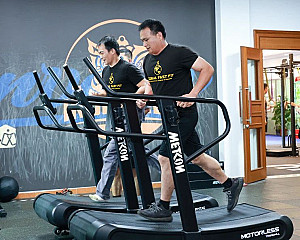
The Global Fast Fit Pro benchmark was the original version of the GFF system.
The benchmark consists of four components:
-
30 Pushups
-
30 Plank Leg Lifts
-
30 Squats
-
500 Meter Run
While GFF Standard was ultimately adopted as the flagship benchmark for broad population use, GFF Pro remains an important part of the Global Fast Fit ecosystem.
The relationship between the two benchmarks reveals one of the most important lessons learned during the development of GFF.
A benchmark is only useful if people can actually perform it.
Early testing showed that GFF Pro was highly effective at differentiating fitness levels among active individuals. However, it also revealed that many participants who considered themselves reasonably fit were unable to complete the benchmark successfully. Pushups proved to be a particularly significant barrier, especially among older adults, women, and individuals with limited training backgrounds.
This finding was important because the long-term objective of Global Fast Fit was not simply to identify elite performers. The goal was to create a benchmark that could be deployed globally and serve as a common reference point across diverse populations.
Rather than abandoning GFF Pro, the project evolved into a two-tier system.
The GFF Standard routine became the primary benchmark for broad population assessment and comparison. GFF Pro remained available as a more demanding benchmark for individuals seeking a higher standard of performance.
This distinction allows the system to evaluate functional fitness at different levels while maintaining consistency in methodology and verification.
Like the Standard benchmark, GFF Pro is designed around observable physical performance rather than self-reported fitness. Participants demonstrate their abilities through a structured sequence of exercises that can be reviewed and verified through video evidence. This emphasis on verification is one of the characteristics that distinguishes GFF from many fitness assessments that rely heavily on estimates, questionnaires, or indirect measurements.
The existence of GFF Pro also provided valuable information about global fitness itself. One of the most significant outcomes of the project was not the benchmark design, but the insight gained from observing how different populations performed when asked to meet a consistent standard. The gap between perceived fitness and demonstrated fitness was often larger than expected.
Today, GFF Pro serves several purposes. It provides a more challenging benchmark for highly motivated participants, creates additional differentiation among stronger performers, and continues to contribute valuable data to the broader Global Fast Fit research and benchmarking effort.
The development of GFF Pro ultimately influenced the creation of the GFF Standard routine, making it one of the most important components in the history of the project. Without Pro, the team would not have discovered where the balance between rigor and accessibility truly existed.
In that sense, GFF Pro is more than a harder benchmark. It is the benchmark that helped define what Global Fast Fit would become.

Global Fast Fit (GFF) Standard
Bryan Matott , India Jun 13, 2026
The Global Fast Fit Standard is the flagship benchmark of the Global Fast Fit system.
It was designed to answer a simple question: 'Can a person demonstrate a practical baseline level of functional fitness using a small number of exercises that can be performed almost anywhere in the world?'
Many fitness assessments require specialized equipment, laboratory testing, expensive devices, or lengthy protocols. While those approaches can provide useful information, they are often difficult to deploy at scale.
The GFF Standard was built around a different goal: creating a benchmark that is simple enough to be performed in diverse environments while still measuring multiple aspects of physical capability.
The benchmark consists of four components:
-
15 Pushups
-
15 Plank Leg Lifts
-
15 Squats
-
250 Meter Run
Together, these exercises evaluate upper-body strength, core stability, lower-body function, and cardiovascular capacity. Rather than measuring a single fitness attribute, GFF Standard is intended to assess an individuals level of functional capability across several major categories of movement.
The choice of exercises was not accidental. One of the challenges in building a global benchmark is balancing accessibility with difficulty. A benchmark that is too easy provides little information. A benchmark that is too difficult excludes a large portion of the population.
The GFF Standard routine was developed after extensive testing and comparison against alternative approaches. Early versions of the benchmark were significantly more demanding. While those versions provided greater differentiation among highly fit individuals, they proved impractical for broad population deployment. The Standard emerged as a compromise between rigor and accessibility, allowing meaningful comparisons across age groups, genders, countries, and fitness backgrounds.
Another important feature of GFF Standard is verification. Unlike self-reported fitness questionnaires or estimated scores, GFF is designed to support video-based validation. Participants can submit evidence of performance, allowing results to be reviewed and verified. This creates a stronger foundation for comparison than systems that rely solely on self-reported data.
Over time, GFF Standard has become more than a fitness test. It serves as a common reference point within the broader Global Fast Fit ecosystem. Results can be compared across populations, used in longitudinal tracking, incorporated into health and performance studies, and connected with other human performance data.
The value of GFF Standard is not that it perfectly measures every aspect of fitness. No single benchmark can do that. Its value lies in providing a practical, repeatable, and globally deployable reference point that allows people from different backgrounds and locations to be measured against the same standard.
In a world where fitness is often assessed using incompatible methods, the Global Fast Fit Standard was created to provide a common language for functional fitness.
History of the Benchmark Design
Bryan Matott , India Jun 12, 2026
The Global Fast Fit benchmark did not begin as an attempt to create another fitness challenge.
It began with a much larger question:
Is it possible to create a practical fitness benchmark that can be used across countries, populations, and environments while still producing meaningful, verifiable results?
At the time, the fitness landscape was already crowded with tests, assessments, scoring systems, and performance standards. Some focused on strength. Others emphasized endurance, body composition, athletic performance, or health outcomes. Many required specialized equipment, laboratory testing, trained personnel, or facilities that were not universally available.
What was missing was a benchmark that could be deployed broadly, verified consistently, and compared across diverse populations.
The earliest versions of Global Fast Fit focused on functional movement and observable performance. Rather than relying on questionnaires, estimates, or indirect measurements, the goal was to create a benchmark based on tasks that people could actually perform and demonstrate. Every exercise had to satisfy several requirements. It needed to measure a meaningful aspect of physical capability, require little or no equipment, be practical in different environments, and be suitable for video verification.
This process led to the development of what would later become GFF Pro.
The original benchmark was intentionally demanding. The objective was to establish a standard that represented a meaningful level of functional fitness rather than a minimal participation threshold. Early testing demonstrated that the benchmark successfully differentiated performance levels among active individuals and athletes. However, it also revealed something unexpected.
Many people who considered themselves reasonably fit could not complete the benchmark.
Pushups emerged as a particularly significant obstacle. Across different age groups, populations, and training backgrounds, performance dropped more quickly than anticipated. What initially appeared to be a reasonable standard proved substantially more difficult for the general population than expected.
This discovery became one of the most important findings of the project.
The challenge was no longer designing a rigorous benchmark. The challenge was designing a benchmark that could function globally.
A benchmark that only a small percentage of the population can complete may be useful for evaluating high performers, but it is less useful as a global reference point. The project therefore shifted from creating a single benchmark to creating a benchmark system.
GFF Pro remained as the higher-level standard, while a second benchmark was developed to support broader participation. This eventually became the GFF Standard.
The Standard preserved the core philosophy of the project while making the benchmark accessible to a much larger percentage of the population. The objective was not to make the test easy. It was to establish a baseline level of functional fitness that could be applied consistently across different countries, age groups, and backgrounds.
As deployment expanded, the benchmark design continued to evolve. Video verification became a central component of the system, helping create a stronger evidentiary foundation than self-reported performance alone. Data collection efforts expanded across multiple countries, creating opportunities to observe how the benchmark performed in different environments and populations.
These experiences influenced the development of the broader Global Benchmarking Methodology and eventually contributed to the creation of Human Performance Intelligence (HPI). What began as a fitness benchmark gradually became part of a larger effort to understand human performance through standardized, verifiable measurement.
Perhaps the most important lesson from the benchmark design process was that accessibility and rigor are not opposing goals. A successful benchmark must balance both. Too easy, and it provides little information. Too difficult, and it excludes much of the population it is intended to measure.
The history of the Global Fast Fit benchmark is therefore not simply the history of a fitness test. It is the history of an ongoing effort to create a common reference point for human performance—one capable of supporting meaningful comparison across populations, countries, and generations.
The benchmark that exists today is the result of years of testing, refinement, deployment, and observation. More importantly, it is the result of learning what happens when a benchmark is subjected not just to theory, but to the realities of the real world.

VO₂max - Is it really worth the cost?
Bryan Matott , India Oct 18, 2025
Visit to George Mason University Fitness and Aquatics Center
Our team recently visited the George Mason University (GMU) Fitness and Aquatics Center to undergo VO₂max testing and evaluate their procedures. The facility is generally accessible to university athletes and research participants, though members of the public can also book sessions by scheduling approximately two weeks in advance. GMU is recognized as one of the top institutions offering VO₂max testing on the U.S. East Coast and is conveniently located about 30–45 minutes from the Global Fast Fit (GFF) headquarters.
Upon arrival, we found the main office closed—even at our scheduled appointment time—which resulted in roughly a 30-minute wait before staff arrived. We were eventually greeted by two technicians, likely graduate assistants completing practicum hours, who facilitated the testing process. No doctor or supervising professor was present during the session, and the technicians were unable to answer several technical questions regarding the methodology and interpretation of the test.
The base cost for VO₂max testing at GMU is approximately $175, though our total was around $300 after adding complementary assessments such as BodPod body composition analysis and Resting Metabolic Rate (RMR) testing. The entire visit lasted about two hours. Following the session, the test results were analyzed by a supervising professor and delivered within roughly a week and a half. To discuss the findings in more detail, we were required to schedule a separate consultation call.
Procedures aside, we did learn that John (Founder of GFF) has an excellent VO₂max at 39.5 with a % VO2 max @ ventilatory threshold at 55%.
A few noteworthy observations emerged from the final report:
-
No comparative VO₂max grading was provided for individuals aged 70 and above, leaving a data gap in higher-age categories.
-
Ethnicity was recorded simply as “general population,” suggesting that potentially valuable demographic variables are not being captured for future trend or population analysis.
Overall, while the GMU Fitness and Aquatics Center offers legitimate and scientifically valid VO₂max testing, the experience highlights opportunities for improved professionalism, accessibility, and data precision—particularly for those seeking deeper insights into fitness performance analytics.


Push Ups!
Bryan Matott , India Jul 26, 2024 2
One of my responsibilites working with Global Fast Fit is to review incoming video submissions from all participants around the world. I think I have watched more people doing push ups then I would have ever imagined.
Over this time period I have seen some unique approaches to form. Often times its a matter of arm placement, whether narrow and close to your body, or wide and away from your body, both seem to have advantages and disadvantages.
A surpising attribute has been how people decide to hold their hands, I have seen hands forward, hands inwards (so difficult), fists (more difficult), and most recently a participant has entered 3 submissions doing push ups on their fingertips. The strength to do something like that must be phenomenal. Im not quite sure I can hold myself in position on my fingertips for any amount of time, let alone through a full set of push ups
Anyways, short thought on a long developing assessment. Happy Push Ups!

Climbing back up with Global Fast Fit
Bryan Matott , India Jul 16, 2024
I am not ashamed to admit that currently I am not in the best shape of my life. It has been 10+ years since I was competitively active. You could say that I have almost ceased physical activity due to my current work and hobbies. I like computers, and making art and music on computers, and thats fine, but it doesnt get my blood moving like a good exercise. I do hike, somewhat often, or I try to, but my days of being a top athlete are far away from me.
I played D1 soccer throughout my youth and even had scholarships to play at a higher level in college. Between soccer, hockey, and outdoors, I was quite active, never slowing down. Unfortunately, sometime around my 16th birthday I had taken a bad fall during a game and separated my clavical. It was bad enough to where I had to take a 6 month break from all activity, which even in that short time, I lost some of the drive I had.
My early adult life consumed me, more work, more school, less sports, less activity, but I was relatively always in decent shape from my years of sports. But as time went on, my drive and motivation for a fit lifestyle strayed away from me. As I stated above, I probably went 10 years with without taking care of myself, then Global Fast Fit provided me an outlet.
Despite my current physical status, I did hold the top score on the Global Fast Fit Leaderboards for 6 months. I had to train a few rounds before recording myself, and now Im trying to stay active in the case that I decide to take the top spot again :)
--
Some time has passed since I was on the Global Fast Fit leaderboard, but I am happy to see the thousands of submissions come in. Younger people, older people, of all body types and backgrounds, can come together to work towards a healthy lifestyle. My wife and myself partake in the Global Fast Fit exercises daily. She is participating in a beginners program and I perform alongside her to get back into shape, and stay in shape. Its no trouble to take 10 mins of my day and put it towards a short, high intensity work out. I can feel that it puts more energy and life back into me, in an otherwise dorment lifestyle.
I encourage everyone to take control , do something good for yourselves. It starts with your health. A healthy body and a healthy mind pave way for a much healthier future.