 Login with Google
 Signin with Apple
History of the Benchmark Design
Bryan Matott , India Jun 12, 2026
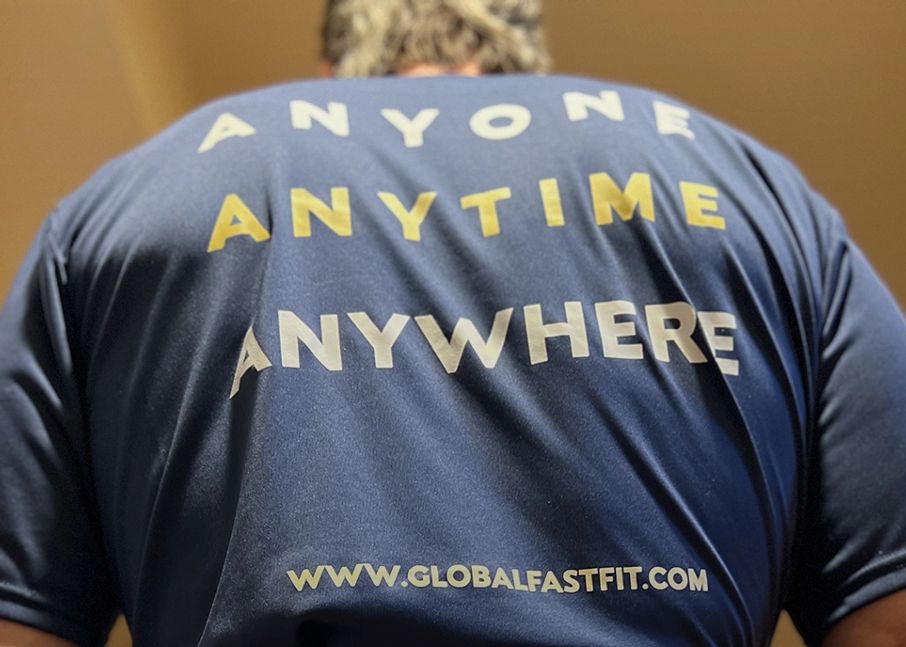
The Global Fast Fit benchmark did not begin as an attempt to create another fitness challenge.
It began with a much larger question:
Is it possible to create a practical fitness benchmark that can be used across countries, populations, and environments while still producing meaningful, verifiable results?
At the time, the fitness landscape was already crowded with tests, assessments, scoring systems, and performance standards. Some focused on strength. Others emphasized endurance, body composition, athletic performance, or health outcomes. Many required specialized equipment, laboratory testing, trained personnel, or facilities that were not universally available.
What was missing was a benchmark that could be deployed broadly, verified consistently, and compared across diverse populations.
The earliest versions of Global Fast Fit focused on functional movement and observable performance. Rather than relying on questionnaires, estimates, or indirect measurements, the goal was to create a benchmark based on tasks that people could actually perform and demonstrate. Every exercise had to satisfy several requirements. It needed to measure a meaningful aspect of physical capability, require little or no equipment, be practical in different environments, and be suitable for video verification.
This process led to the development of what would later become GFF Pro.
The original benchmark was intentionally demanding. The objective was to establish a standard that represented a meaningful level of functional fitness rather than a minimal participation threshold. Early testing demonstrated that the benchmark successfully differentiated performance levels among active individuals and athletes. However, it also revealed something unexpected.
Many people who considered themselves reasonably fit could not complete the benchmark.
Pushups emerged as a particularly significant obstacle. Across different age groups, populations, and training backgrounds, performance dropped more quickly than anticipated. What initially appeared to be a reasonable standard proved substantially more difficult for the general population than expected.
This discovery became one of the most important findings of the project.
The challenge was no longer designing a rigorous benchmark. The challenge was designing a benchmark that could function globally.
A benchmark that only a small percentage of the population can complete may be useful for evaluating high performers, but it is less useful as a global reference point. The project therefore shifted from creating a single benchmark to creating a benchmark system.
GFF Pro remained as the higher-level standard, while a second benchmark was developed to support broader participation. This eventually became the GFF Standard.
The Standard preserved the core philosophy of the project while making the benchmark accessible to a much larger percentage of the population. The objective was not to make the test easy. It was to establish a baseline level of functional fitness that could be applied consistently across different countries, age groups, and backgrounds.
As deployment expanded, the benchmark design continued to evolve. Video verification became a central component of the system, helping create a stronger evidentiary foundation than self-reported performance alone. Data collection efforts expanded across multiple countries, creating opportunities to observe how the benchmark performed in different environments and populations.
These experiences influenced the development of the broader Global Benchmarking Methodology and eventually contributed to the creation of Human Performance Intelligence (HPI). What began as a fitness benchmark gradually became part of a larger effort to understand human performance through standardized, verifiable measurement.
Perhaps the most important lesson from the benchmark design process was that accessibility and rigor are not opposing goals. A successful benchmark must balance both. Too easy, and it provides little information. Too difficult, and it excludes much of the population it is intended to measure.
The history of the Global Fast Fit benchmark is therefore not simply the history of a fitness test. It is the history of an ongoing effort to create a common reference point for human performance—one capable of supporting meaningful comparison across populations, countries, and generations.
The benchmark that exists today is the result of years of testing, refinement, deployment, and observation. More importantly, it is the result of learning what happens when a benchmark is subjected not just to theory, but to the realities of the real world.
Login to Comment