 Login with Google
 Signin with Apple
Sorry, my AI said "No"
Abigael Rotich , Kenya Aug 21, 2026
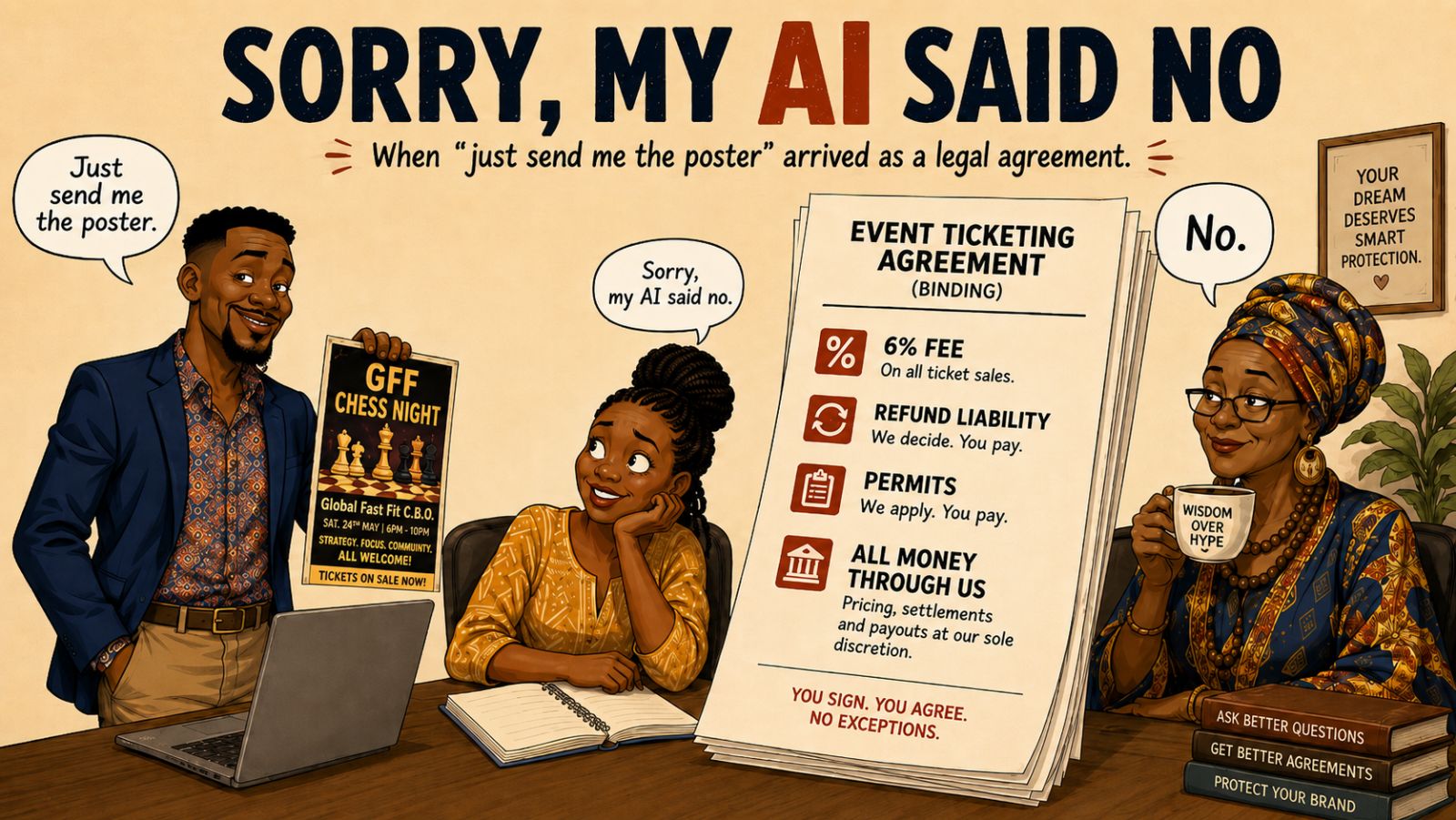
You know how when you were young and you wanted to go somewhere — maybe to eat lunch at your friend’s house, maybe to play, maybe even to go for a sleepover — and then your mother said no? So you had to go back, very helplessly, and say, “Sorry, my mum said No.” That was me in this situation. Except I am now a grown woman helping run a community-based organization, the thing in question was not a sleepover, and the mother who said no was ChatGPT.
This whole thing started very innocently. At Global Fast Fit C.B.O, we had started running regular chess events, and they were slowly getting attention in Nakuru. The events were not huge, but they had life. They had a community feeling around them — children, adults, beginners, stronger players, friendly competition, and the kind of buzz that makes you feel something is growing. Somewhere along the way, a local event-management and ticketing platform noticed what we were doing and approached us with what sounded like a very simple offer: send us your poster, send us your event details, we can advertise and ticket for you.
At first, that sounded useful. As a small organization, you are always looking for more visibility. More people posting your event means more eyes on the poster. More eyes can mean more attendance. The offer sounded like extra support, not a takeover. In my mind, it was simple: we would continue promoting our own events through our own networks, and this platform would also help put the events in front of more people. Let us advertise. Let them advertise. Let everyone bring people. Very harmless, very practical, very “why not?”
But then the simple thing started developing a personality. It was no longer just “send us the poster.” It became “all tickets should go through our platform.” Then it became “all the money should go through us.” Then it became “we deduct our percentage and later remit the balance to you.” That is where the first discomfort started, because anyone who has ever planned even a small event knows that event money is not decorative. It is not just a figure waiting quietly for the event day. It moves before the event. Snacks have to be bought. Some snacks need preparation before the day itself. Branding has to be done early. T-shirts, medals, water bottles, printing, logistics, transport, venue preparation — these things do not wait for the morning of the event.
The other issue was the payment journey. We already had our own paybill. We already had our own community. Many people who attend our events hear about them directly from us — through WhatsApp, friends, family, neighbours, parents, workmates, chess contacts, and people who know the centre. When someone is already in your inbox asking, “I saw your poster, how do I pay?” the easiest and most natural thing is to give them the paybill immediately. You do not want to send them on a long pilgrimage through a third-party link, extra steps, and a different payment process. When someone gets the urge to give you money, you should not create an obstacle course. Some people will tolerate a complicated process because they like you. Others will quietly disappear.
So from where I stood, there was already a mismatch. What we needed was additional visibility and support. What was slowly being requested was control of the ticketing pathway. That difference matters. We were not looking for someone to take over the event. We were looking for more people to help us amplify it.
Eventually, a meeting happened. I attended mainly as the note-taker, which is a role I actually enjoy. I like sitting in the background during these kinds of conversations because I get to observe how people present themselves, how proposals are framed, how negotiations move, and how much is said without being said directly. I am still learning that world, so I like listening. The meeting was meant to clarify what this proposed working relationship would look like, especially because the ticketing arrangement was no longer sounding as simple as it had first appeared.
During the meeting, one thing became clear to me: we needed the offer put in writing. Not because anyone wanted to create unnecessary bureaucracy, but because verbal conversations are too slippery once money starts moving. People forget what they said. People remember things differently. People become very creative with memory when an event starts making money. The right time to disagree is before the event, before the ticket sales, before the sponsors, before the crowd, before the pressure. So the request was simple: send us a written MOU or agreement showing what you want, what you are offering, what you expect from us, and how the money and responsibilities will work.
The meeting ended without a concluded agreement. That part is important. We did not leave with signed terms. We did not leave having accepted the proposed structure. We left with the understanding that a written document would be sent for review. So when the document eventually arrived, I treated it as a draft. A proposal. Something to be read carefully before any decision could be made.
Then the document came.
And my goodness.
The audacity arrived in PDF form.
What I expected was maybe a simple MOU: here is the event, here is what we will do, here is what you will do, here is our fee, here is when money will be remitted. What arrived was a long, formal agreement with clauses on ticketing, gate verification, refunds, insurance, liability, permits, data protection, event safety, crowd control, cancellations, branding, complimentary guests, deductions, and responsibilities. It was no longer giving “send me the poster.” It was giving “welcome to the legal department.”
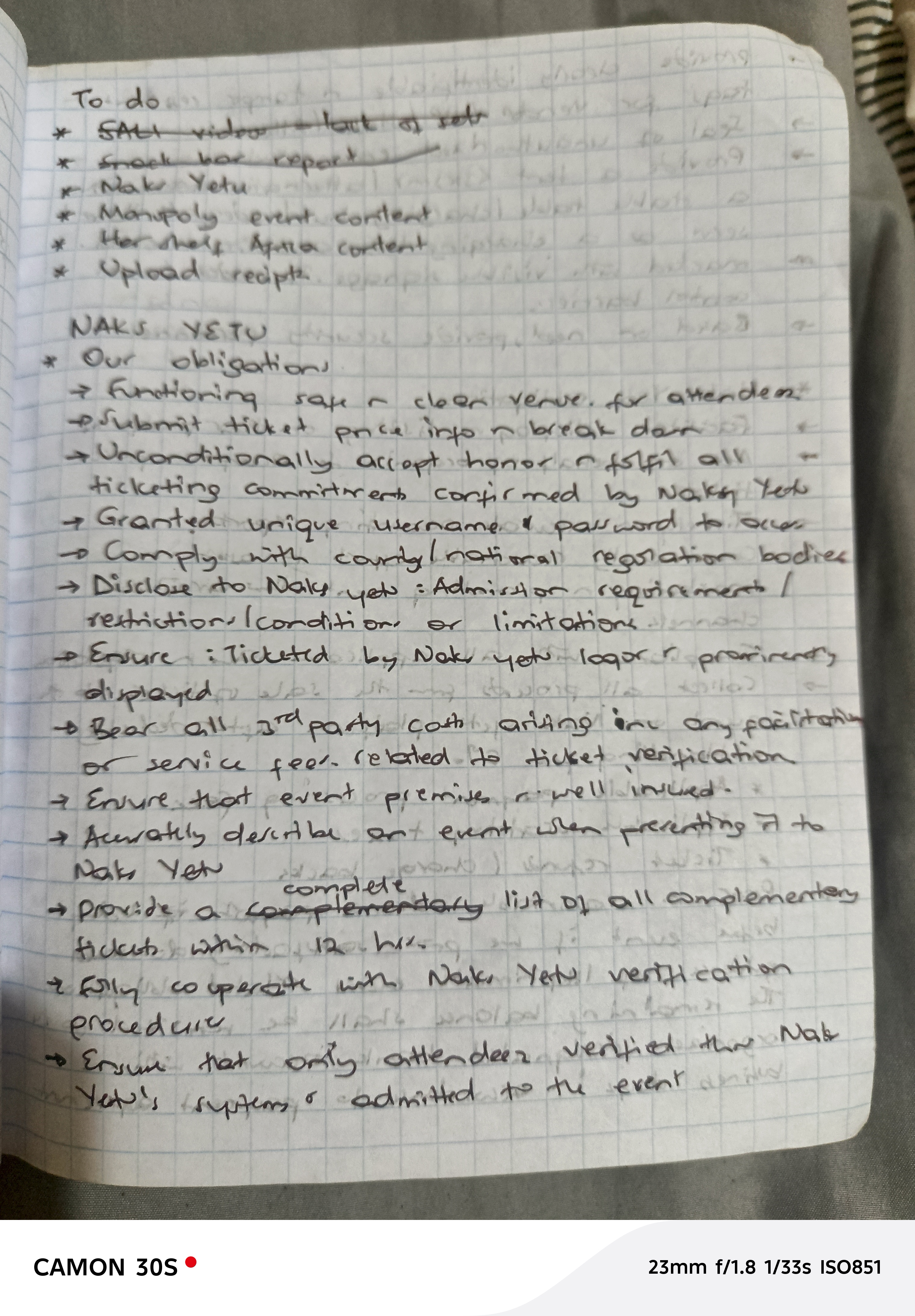
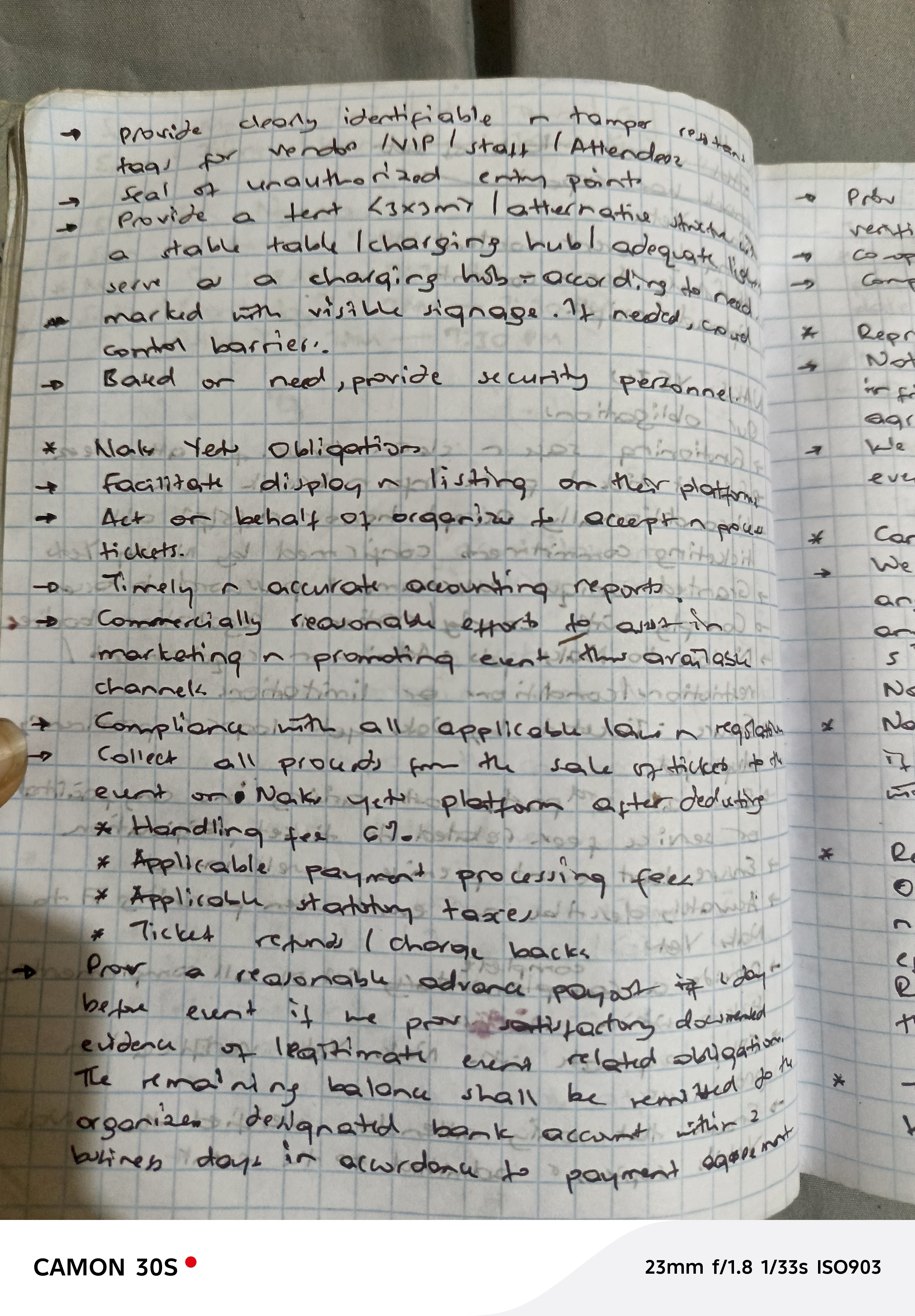
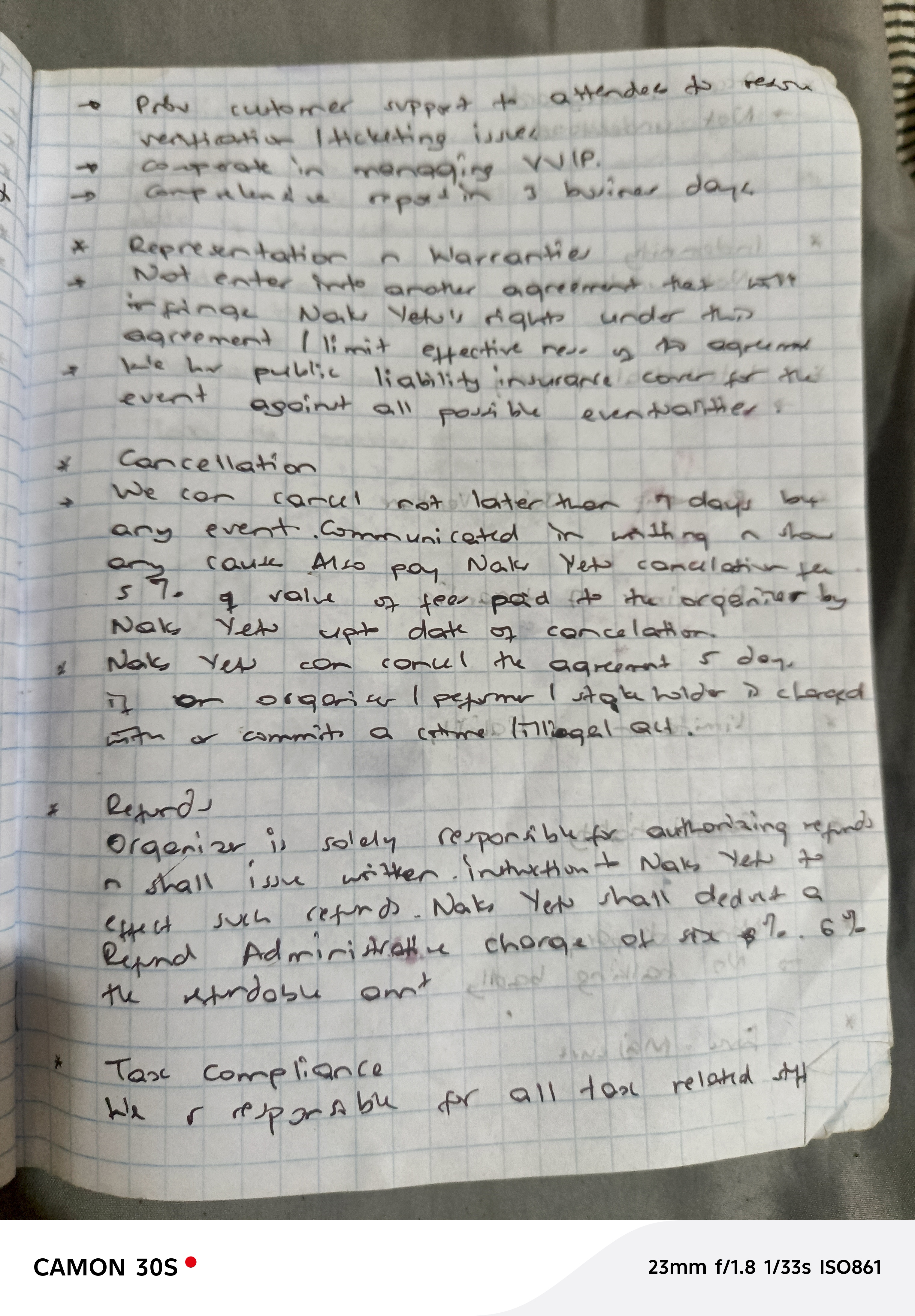
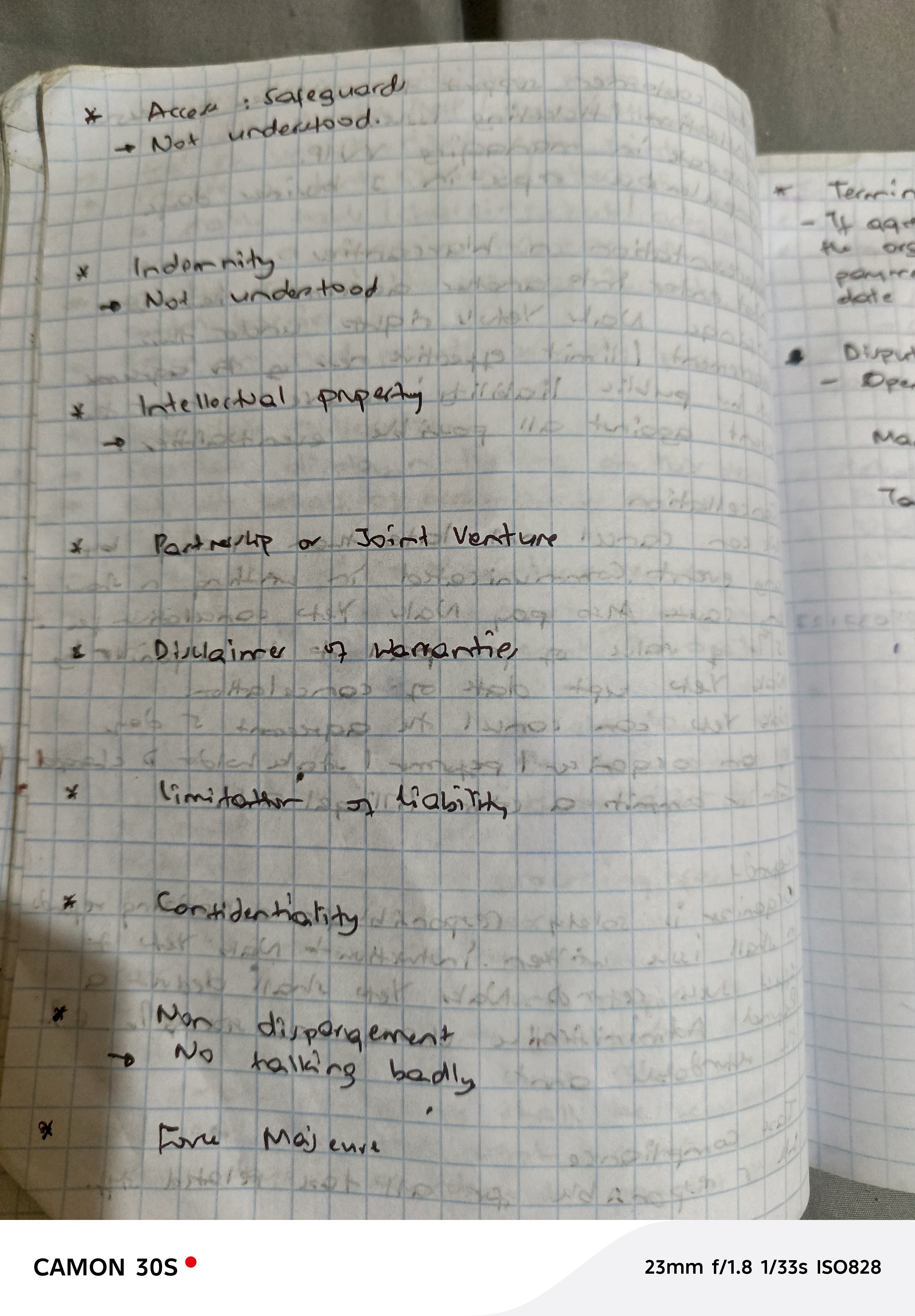
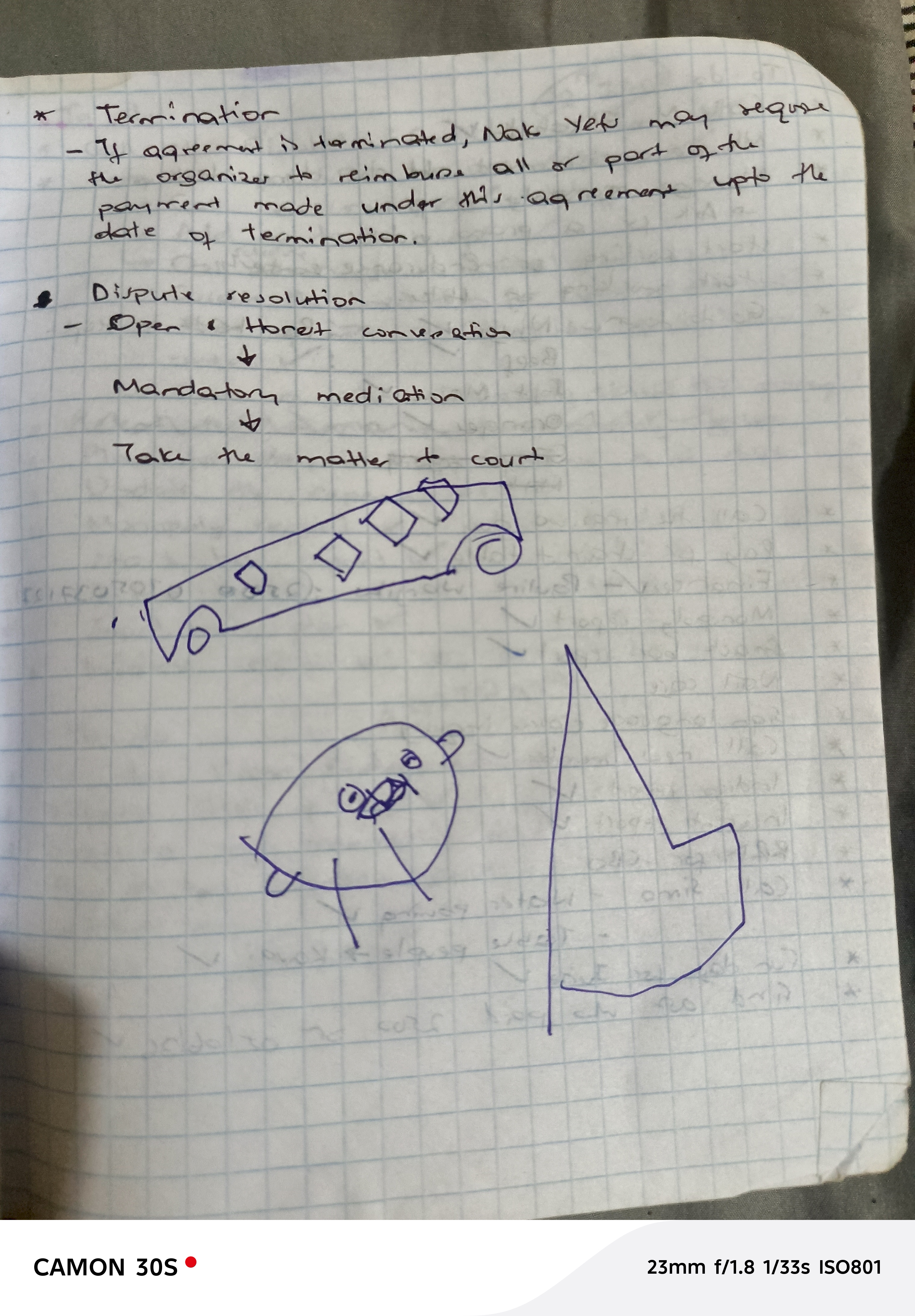
I read it. Then I read it again. I wrote notes in my book. I tried to break it down clause by clause, but the document had so much legal language that parts of it kept slipping past me. I understood maybe 65% of it, but the remaining 35% was making me deeply uncomfortable. It felt like being insulted in a language you do not fully understand. You may not know the exact words, but your spirit knows something has happened. That was the feeling. I could not explain every clause perfectly, but I knew the agreement was not as innocent as the original offer had sounded.
So I did what any modern manager operating slightly outside her expertise might do. I took it to ChatGPT. Not to make the decision for me, not to replace a lawyer, not to become the board of directors, and not to give the final word on behalf of the organization. I needed a first layer of translation. I needed the kind of help you ask from that lawyer friend you wish you had in the room — the one you call and say, “Please read this thing and tell me what I am actually agreeing to.”
That is where the story became funny to me, because ChatGPT did not scream. It did not dramatize. It did not say, “Run.” It calmly translated the agreement into plain English, and the more it explained, the more the answer became obvious. Clause by clause, the document stopped looking like a simple ticketing support proposal and started looking like a risk-transfer ceremony. The ticketing company would handle ticketing, ticket verification, ticket reports, and ticket proceeds, but GFF would remain responsible for most of the things that could go wrong.
In plain language, the agreement was saying that they would collect ticket money, deduct fees, control the ticketing process, and later remit the balance. Meanwhile, we would carry the burden of the actual event: permits, venue safety, insurance, refund exposure, crowd control, complimentary guest lists, gate arrangements, data duties, legal compliance, and operational risks. The 6% fee itself was not even the main issue. The bigger issue was the position the agreement placed us in. They held the platform, the money pathway, and the protective clauses. We held the event risk.
That is when my AI mother said no.
Politely. With reasons. But no.
The funny part is that the original offer had been so casual. It started as “send us the poster.” By the time the agreement was translated into ordinary language, it had become “all money passes through us, we deduct our percentage, we pay later, you carry the event risk, and here are several clauses about permits, insurance, refunds, data, liability, and safety.”
And this is where the management lesson became bigger than the document itself. Many small organizations are vulnerable in exactly this way. Someone approaches you with what sounds like an opportunity. The language is friendly. The offer sounds useful. The other party appears experienced. Then a formal document arrives, and because it looks professional, you feel pressure to treat it as reasonable. Sometimes you even feel embarrassed to admit that you do not fully understand what you are reading. That embarrassment is dangerous, because people do not only sign bad documents because they are careless. Sometimes they sign because the other person sounds confident, the document looks official, and they do not want to look difficult.
This is why I appreciated having AI as a first layer of protection. It did not replace judgment. It improved judgment. It slowed me down. It turned legal language into operational language. It helped me see where the money was flowing, where the risk was sitting, where the power was being placed, and where the agreement did not match the original conversation. It helped me move from vague discomfort to specific questions. That is a very useful management tool.
The relationship eventually wrapped itself up quietly. We did not proceed with that agreement. The person later attended one of our events as a participant, not as our ticketing provider. He paid, played, and left. And that was fine. Not every conversation has to become a partnership. Not every opportunity has to be accepted. Sometimes the most important outcome of a meeting is learning what not to enter.
The lesson was not that ticketing platforms are bad. They are not. For the right event, with the right terms, they can be very useful. The lesson was also not that AI is a lawyer. It is not. The lesson was that as a growing organization, we need document literacy just as much as we need programs, events, sponsors, and ideas. A partnership is not a partnership just because the language is polite. A document can smile at you while quietly moving all the chairs in the room.
So now I have a new management habit. When something looks official but feels strange, I do not panic, and I do not pretend to understand. I read it slowly. I translate it. I ask what each clause means in real life. I check where the money goes. I check who carries the risk. I check who has control. I check whether the document matches the conversation that came before it. And when necessary, I go back with my newest excuse in the book:
Sorry, my AI said no.
https://docs.google.com/document/d/138EH7eB-leoGZF-tlnHK0zD-_OSdbGjiFK7UZbt5k40/edit?usp=drivesdk
Login to Comment
This is a nice article. An eye opener..
A lot of lessons to pick up from this blog.