 Login with Google
 Signin with Apple
Do AI cookies crumble?
Abigael Rotich , Kenya Aug 23, 2026
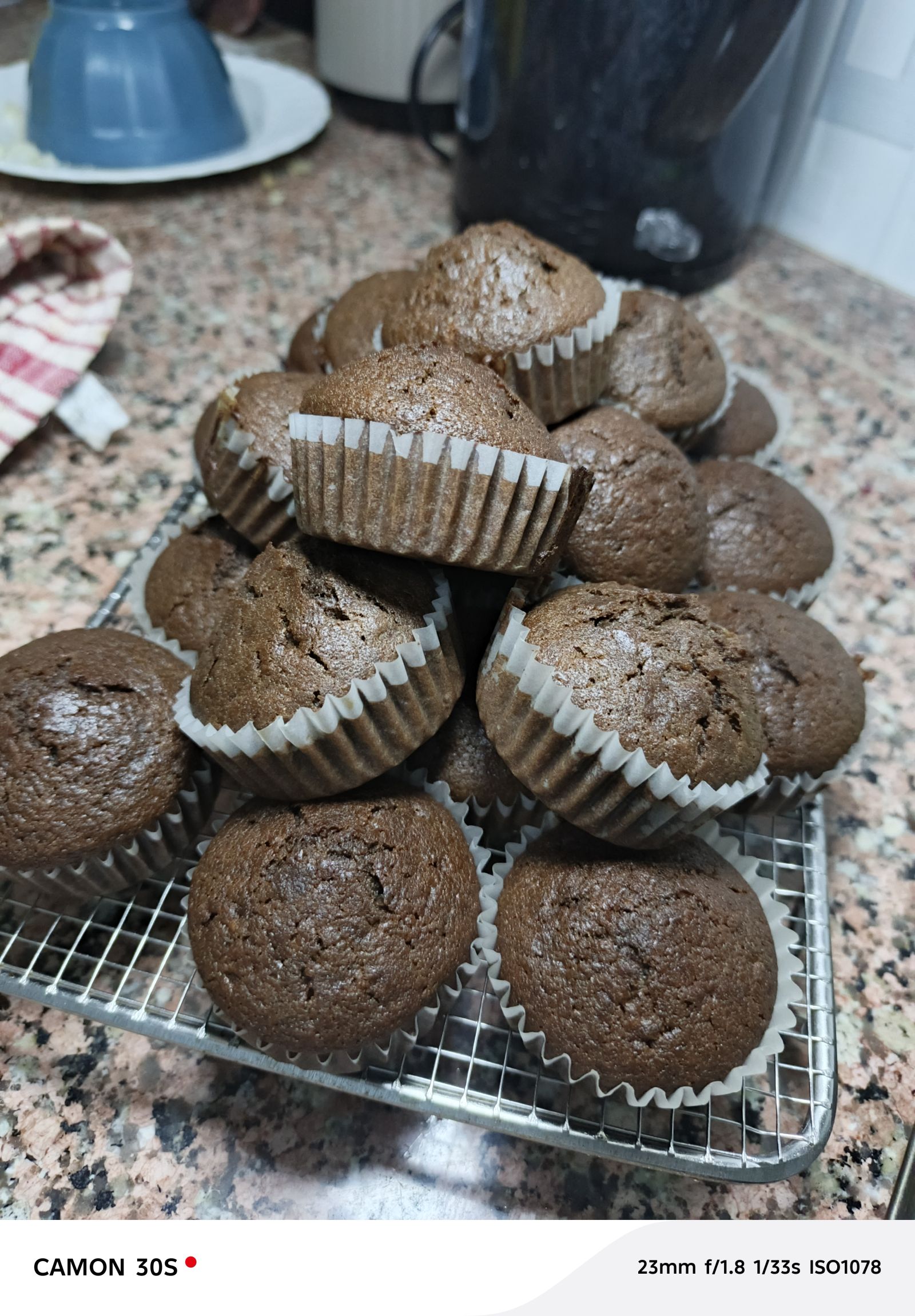
AI didn’t teach me how to cook. Knowing how to cook taught me how to use AI to cook.
I have been cooking for a long time. For years, my relationship with recipes was simple: I searched for them. If I wanted carrot cupcakes, pilau, bread, cake, or something I had never made before, I would go online, mostly to YouTube, search for what I wanted, compare a few recipes, choose one, check the ingredient list, and then work backwards from there. Do I have tomatoes? Yes. Onions? Yes. Ginger? No. Vanilla? No. Fine, add those to the shopping list. The recipe told me what I needed, and I went out to find it.
TikTok came later, and although my algorithm seems determined to feed me a recipe every third or fourth scroll, I have learned to be suspicious of TikTok food. Everything looks magnificent in thirty seconds. Butter sizzles. Cheese pulls. Cakes rise perfectly. Someone cuts into something impossibly moist. Then I try it, and more often than I would like, it flunks. So YouTube remained my safer place for recipes. At least there, someone usually had enough time to explain what they were doing. I could see textures. I could watch the batter. I could listen for the little warnings: don’t overmix this, brown that properly, wait until this changes colour.
But even YouTube has limitations. Sometimes you have to watch three or four videos before you find one that suits what you have. Sometimes the recipe assumes ingredients that are easy to find somewhere else but not in your kitchen. Sometimes it is nine at night, the shops are closed, you live far enough from everything that “just pop out and buy some baking soda” is not a realistic suggestion, and your children still need something to eat the next morning. That is where AI changed cooking for me.
But I think I have to go further back to explain why.
Growing up, my mother was not what people would call an impressive cook. She was a full-time nurse raising three children, mostly on her own. My father was a soldier, and when we were young he was away on missions for long periods of time, sometimes years. My mother would leave for work early, finish her shift in the late afternoon, collect us, shop for whatever was needed, get home and start again. We did not have the convenience of walking into the kitchen and turning on a gas burner. We cooked in an outside kitchen. If she got home and the fire was out, the kitchen was cold. Firewood had to be split. A fire had to be lit. Then dinner had to be cooked. There was homework. Laundry. Cleaning. Children to bathe. Clothes and school things to prepare. And somewhere in all of that, she also had to rest because the next morning was coming whether she was ready or not. By nine at night, our house was dark and silent.
So my mother cooked what worked. We had a small rotation of meals. They were healthy. They were fully cooked. They filled our stomachs. There was no garnish, no unnecessary flourish, no culinary performance. The objective was sustenance.
Other people noticed. My aunties, especially those who spent more time at home or had more support in their households, cooked differently. Their food looked different. There was more variety, more presentation, more of what people considered proper hosting. People sometimes joked about my mother’s cooking. I remember the jokes because they hurt me. They would say things like, “Your mother puts in the least effort,” or joke that they wished they could care as little as she did.
Once, my mother made rice, potatoes and beef. She had cooked the potatoes and beef together in one pot. Guests came over and refused to eat. They said they had already passed by Pizza Inn and had pizza. Maybe they had. But as a child, I saw the looks. I understood the joke beneath the politeness. My mother fed us. She gave the visitors tea. We ate the food later.
That stayed with me, because I could see what my mother was carrying even when other people could only see the plate. So when I started learning how to cook properly in my mid-teens, I was not simply learning a nice life skill. I was learning to cook to avenge my mother.
And because I am apparently incapable of doing anything halfway, I may have overcorrected.
When I later went to campus, started working, and eventually lived alone, cooking became something else entirely. I had time. I would come home and make elaborate, sensual meals for one person: me. People in the apartment block would smell the food and knock. “What are you cooking today?”
If I was making pilau, I did not simply pour ground pilau masala into a pot. I would open a packet of whole pilau spices and select what I wanted for that particular meal. I would look for the biggest, healthiest-looking pieces. I would boil water and soak the spices, then sieve them and rinse away the dust. I would dry-roast the whole spices in a pan until the kitchen became fragrant, then grind some of them and keep others whole. I would split open the cardamom pods to expose the seeds and break down pieces that were too large. I would prepare the peas separately. I would sometimes add a little sugar to the water so they stayed bright green, then remove them before they overcooked. The onions had to become perfectly golden brown. The meat had to brown properly.
There was music. There were podcasts. There was nowhere I needed to be afterwards. I could spend an absurd amount of time making dinner and then sit down and eat it by myself. Cooking was craft. It was entertainment. It was pleasure.
Then I got married. Then I had children, very quickly. Then the jobs became more demanding. Life filled up. And slowly, I started approaching the same line my mother had stood on years before. I no longer had endless time to roast spices while listening to music. Sometimes I was tired. Sometimes there were children demanding things from me. Sometimes work had followed me home. Sometimes dinner was not an artistic opportunity. It was 7 p.m. and people needed to eat.
I could feel myself getting dangerously close to cooking purely for sustenance, and I could not let that happen.
The funny thing is that adulthood also made me understand my mother differently. As a child, I thought the enemy of beautiful cooking was lack of skill. Growing up taught me otherwise. Sometimes the enemy is simply time. My mother had not failed to discover the magic of caramelised onions. She had three children, a nursing job, an absent husband, a wood fire and tomorrow morning coming at her very quickly.
Then, somewhere in the middle of my own busy life, I started a snack bar. And that is how AI cooking properly entered my life.
I had been using AI for other things, and while thinking through the snack bar, I started asking it for recipes. Not just searching for recipes. Building them. That was the lightbulb moment. For years, recipes had told me what I needed. AI was the first time I could tell the recipe what I had.
Before, the process might have been: I want carrot cupcakes. Search YouTube. Watch five videos. Compare them. Pick one. Hope. Now the conversation is more like: I have oat flour. I have carrots. I have yoghurt. I have no vanilla. I have no baking soda. I need enough for forty cupcakes. They are for children, so I do not want them very sweet. Make that work.
And it does. Or at least, it gives me somewhere very useful to begin.
That flexibility has completely changed the way I cook. I am very particular about how much sugar my children eat. Commercial baked goods are often ridiculously sweet. I do not need a cupcake designed to make a five-year-old’s eyeballs vibrate. So I can say that. Reduce the sugar. Make this mildly sweet. I only have honey. I have no butter. Can I use yoghurt? I have leftover rice. I have cumin seeds. What can I do with that?
And suddenly I have cumin rice that is so good I wonder why I was ever going to throw the rice away.
AI is particularly good at leftovers because leftovers rarely fit neatly into traditional recipes. You do not search YouTube for, “I have one and a half cups of rice from yesterday, half a capsicum, two eggs, cumin seeds, a tired spring onion and approximately one tablespoon of yoghurt.” But that is a perfectly normal thing to tell AI. It works with the kitchen that exists.
That is the difference. I used to search for recipes. Now I build them.
One of my favourite moments came after I made a batch of oat cupcakes. Someone tried them and could not get enough. He came back for another, and then another, and eventually asked me to pack some takeaway for his wife. As I was packing them, I casually told him, “Did you know this is an AI recipe?”
He looked genuinely surprised. “Really?”
I told him it was an entirely AI-generated oat cupcake recipe.
He said he had never known anyone who used AI to cook.
I loved that reaction, because by that point the cupcakes had already passed the only test that really mattered. He had eaten them, enjoyed them, come back twice, and wanted to take some home. The fact that AI had helped build the recipe only became interesting afterwards.
And I probably cook about 80 percent of my meals with some form of AI involvement now. That sounds strange even to me, especially because I am not somebody who did not know how to cook and then discovered a robot chef. I already knew how to cook. That is precisely why it works.
I can look at a recipe and know when something seems wrong. Two cups of sugar? Absolutely not. That batter is going to be too wet. That quantity of flour will make it dense. That spice needs to bloom first. Those onions are nowhere near ready.
AI cannot smell my onions. It cannot taste my batter. It cannot know whether the oranges I bought this week have unusually bitter rinds. It cannot touch a dough and realise it needs another tablespoon of flour. It does not know that my particular oven runs slightly hotter on one side.
I am still the cook.
And I think that distinction matters. AI has not replaced my judgement. It has removed a lot of the friction around using it. It handles the mathematics of scaling twelve cupcakes to forty. It helps me think through substitutions. It can suggest what to do with ingredients that need using up. It can adjust sweetness. It can help me troubleshoot when the cocoa powder runs out halfway through a baking session. It can give me a starting point at 9 p.m. when the shops are closed, there is no bread for tomorrow, and I am standing in the kitchen looking at oats, yoghurt, carrots and determination.
It does not return me to the version of myself who could spend two hours hand-roasting pilau spices on a random Tuesday. I do not have that life anymore. What it does is help me preserve some of that woman inside the life I have now. The woman who still wants the food to be interesting. Who still wants her children to eat well. Who still likes discovering what happens if she changes something. Who still wants cooking to contain pleasure, not just responsibility.
The snack bar pushed the experiment further because cooking for your own family is one thing. Selling food is another. A home recipe can be slightly different every time. A product cannot. Now the questions become more serious. Can I make it again? Can I scale it? What does one batch cost? Can I substitute an ingredient without destroying the texture? Will children actually eat it? Will someone pay for it twice? And perhaps most importantly: when the AI-generated cookie comes out of the oven, does it actually taste good?
That is where the machine stops being impressive simply because it produced an answer. The kitchen gets the final vote.
Sometimes the recipe works beautifully. Sometimes it needs more flour, less sugar, or a longer bake. Sometimes I take one look at what it has suggested and change half of it before I even start. Which is why, despite how much AI has transformed the way I cook, I do not think the most interesting question is whether AI can write a recipe.
Of course it can.
The more interesting question is what happens when that recipe meets a cook. Because AI can generate the first draft. It cannot taste the cookie. The interesting part is what happens next when a cook can tell the machine, “That batch was too dry. Fix it.”
Login to Comment