 Login with Google
 Signin with Apple
AI is Not Taking Jobs. AI is Taking Jobs From People Who Refuse to Advance.
Kelvin Njihia Kairu , Kenya Aug 31, 2026
One thing I have learnt since I started using AI is this:
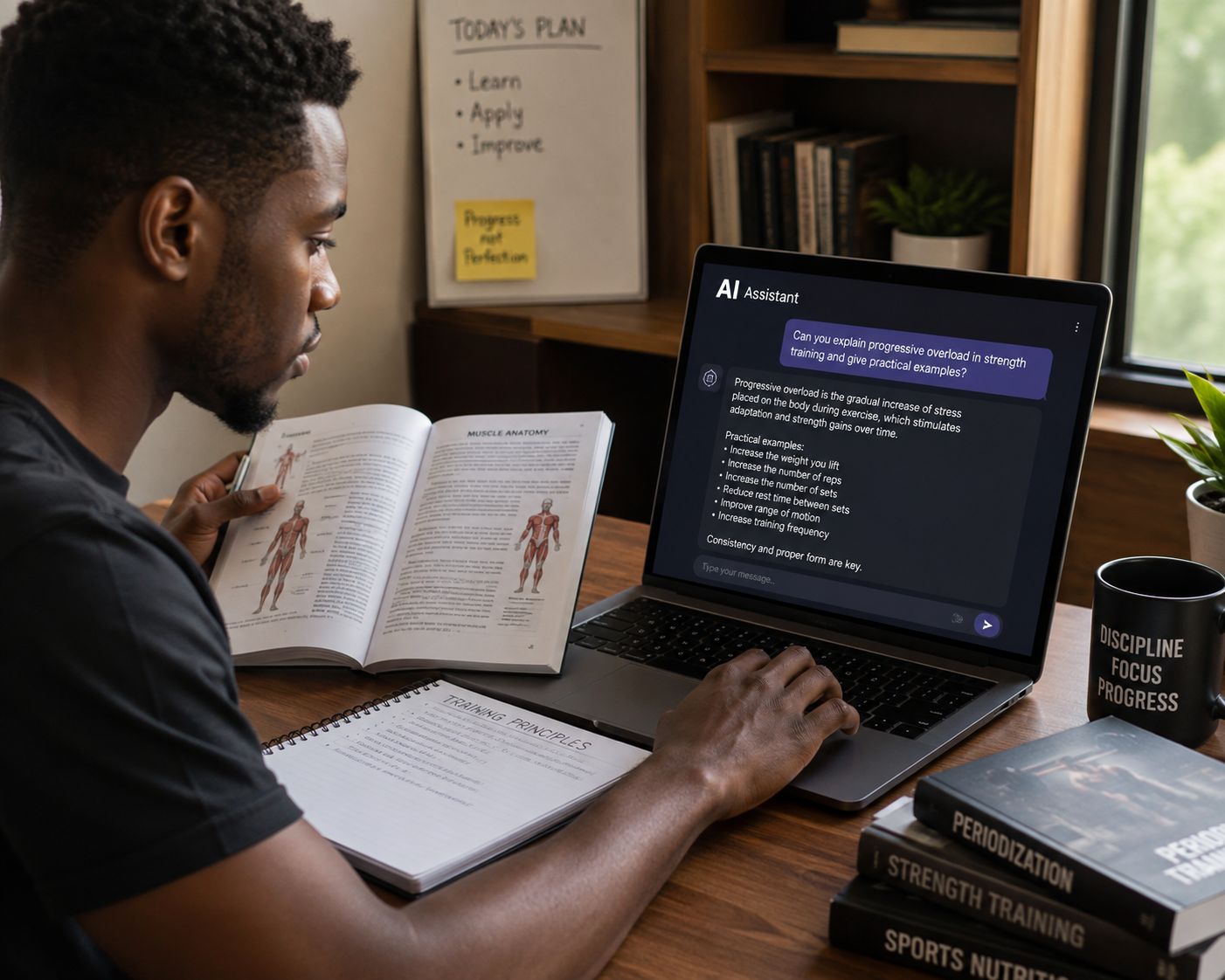
AI is not necessarily here to take your job. It is here to advance what you already know. If you are a fitness trainer, AI can complement your knowledge.
If you are a teacher, AI can make your work easier.
If you are a writer, AI can help you research, structure and improve your ideas.
If you are a marketer, AI can help you analyse information and generate better strategies.
But there is a catch.
You still need to know something. AI is incredibly powerful, but I don't believe it eliminates the need for knowledge. In fact, I think it makes knowledge even more valuable.
Take my own experience. Since the day I started learning about AI, I honestly feel like I have learnt so much. And mind you, I am using the free version.
In my field of fitness, I don't just ask AI, "Give me a workout."
I type what I already know. I bring in things I have read from different sources. I explain what I understand about an exercise, a training method, a client or a particular problem.
Then I ask AI to challenge it. Sometimes it corrects me. Sometimes it adds information I didn't know. Sometimes it gives me another perspective. And sometimes, it is simply wrong.
That last part is important.
AI is not entirely right.
You still have to think. You still have to question. You still have to verify information. You still need experience and judgement.
And that is why I believe the people who will benefit the most from AI are not necessarily those who know nothing.
They are the people who know something and are willing to learn more.
Imagine two fitness trainers.
One trainer has stopped learning. He has been doing the same programmes for years and believes what he already knows is enough.
The other trainer is constantly learning—reading, attending courses, studying human movement, understanding nutrition, learning about different training methods—and now has AI as another tool in his toolbox.
Who do you think will become more effective?
AI doesn't suddenly turn the first trainer into an expert. But it can make the second trainer better, faster and more informed.
The same applies to almost every profession. A teacher who understands teaching can use AI to create lesson plans, generate questions, simplify difficult concepts and develop different ways of explaining the same topic.
A doctor can use technology to assist with information and analysis, while still relying on professional judgement.
A mechanic who understands machines can use AI to troubleshoot problems and access information faster.
A business owner can use AI to analyse data, write proposals, develop marketing ideas and understand customers better.
The common denominator?
There is a human being who knows what they are doing.
I therefore don't see AI as simply "man versus machine." I see it as "what can I do with my existing knowledge now that I have this tool?"
The danger isn't necessarily AI. The danger is refusing to advance while the world around you advances.
Technology has always changed the workplace. The calculator changed mathematics. Computers changed offices. The internet changed communication. Smartphones changed how we access information.
AI is another major step.
So perhaps the question shouldn't be:
"Will AI take my job?"
Maybe the better question is:
"What can I learn so that AI makes me better at my job?"
Because if AI can make a knowledgeable person more productive, more creative and more efficient, then the smartest thing we can do isn't to run away from AI.
Learn your field. Learn AI. Combine the two.
You don't have to know everything. But you need to know enough to ask the right questions, challenge the answers and recognise when something doesn't make sense.
AI may not replace the person who knows what they are doing. It may simply make the person who knows what they are doing much harder to compete with.
And perhaps that is where the real conversation about AI and jobs should begin.
Every Organisation Is Fighting a War- Structure Win the Mission
Kelvin Njihia Kairu , Kenya Aug 22, 2026
Today, I am not blogging about fitness. Today, I am blogging about structure.
If you have followed most of my blogs, you probably already know what to expect from me. Fitness, exercise, nutrition, trainers, clients, lifestyle diseases and everything in between. But today, let's leave the gym for a moment.
Let's talk about organisations.
One of the most interesting examples of planning and execution in modern history is the operation that led to the death of Osama bin Laden.
This is not an article about celebrating terrorism or revisiting the pain caused by 9/11. I am looking at the operation from a completely different perspective: planning, intelligence, reconnaissance, communication, clear instructions, resources and execution.
Think about it.
The operation did not simply begin with someone saying, "Let's go and get him."
There was intelligence gathering. There was surveillance and reconnaissance. There was analysis. There were people whose job was to understand the target and the environment. There was a chain of command. There were specialised teams. There were resources and equipment. There were instructions.
Then came the day of execution. The Navy SEALs were not walking into an unknown environment without preparation. They were executing a mission that had been planned, studied and rehearsed.
If that planning had not been done, the mission could have ended very differently — potentially as a catastrophe.
And this is where the lesson becomes relevant to every organisation.
Organisations Go to War Every Day
Not the physical kind of war. Businesses, organisations, gyms, schools, hospitals, NGOs and government institutions are fighting their own battles every single day.
They are fighting for customers.
They are fighting for efficiency.
They are fighting against competition.
They are fighting to meet targets.
They are fighting to retain employees.
They are fighting to deliver better services.
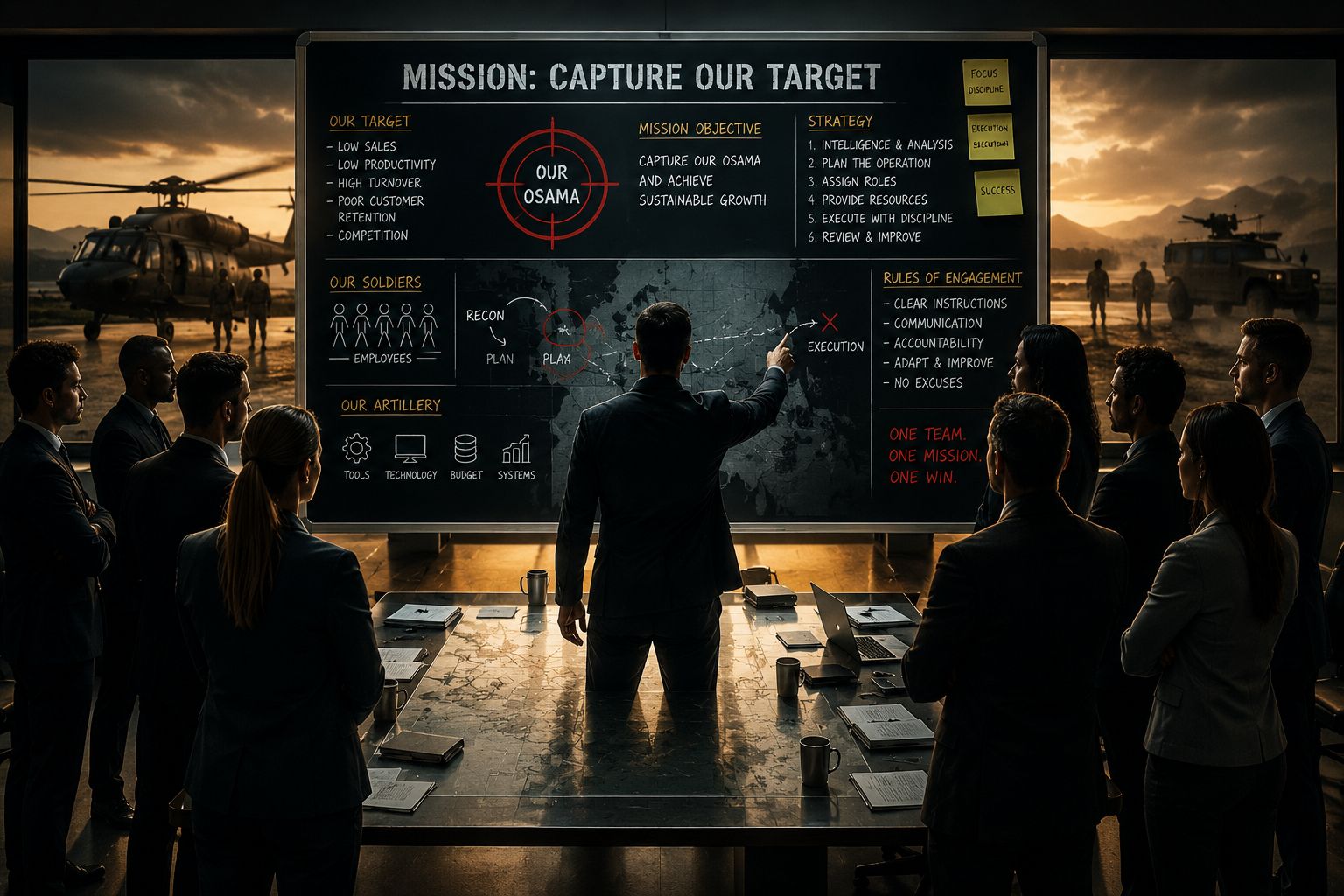
In a way, organisations are trying to capture their own Osama every month, every quarter, every year. The target could be poor sales, low productivity, high staff turnover, poor customer retention, financial problems, competition or simply a target that the organisation has failed to achieve for years.
And if the structure is poor, Osama keeps escaping.
You keep setting the same target.
You keep identifying the same problem.
You keep holding the same meetings.
You keep discussing the same weaknesses.
Yet months later, you are still chasing the same thing. Why?
Because wanting to capture the target is not enough.
You need a mission.
Every Organisation Has Soldiers and Artillery.
Every Organisation has soldiers. The employees are the soldiers.
Every organisation has artillery .The tools, equipment, technology, systems and resources available to employees are the artillery.
And most importantly, every organisation needs a general. Not necessarily one person sitting in an office giving orders, but a leadership structure that understands the mission, develops the strategy and communicates it clearly through the chain of command. Take away any one of these and the mission becomes vulnerable.
You can have the best soldiers in the world, but if they have no equipment, they are limited. You can have the best equipment, but without people who know how to use it, it becomes useless.
You can have excellent employees and excellent resources, but without a plan, everyone can be moving in different directions.
Soldiers + artillery + strategy.
That combination gives an organisation a fighting chance.
Planning Should Come Before the Battle.
One of the biggest mistakes organisations make is expecting employees to figure everything out as they go.
A new month begins.
Everyone reports to work.
Targets are announced halfway through the month.
Instructions change.
Priorities change.
People are moved from one responsibility to another. Then, when the results are poor, someone asks:
"Why didn't we achieve our target?"
But perhaps the better question is:
"Did everyone know the mission?"
Every organisation should have a clear structure before entering its next "battle."
It could be a monthly plan.
A quarterly plan.
A yearly plan.
Whatever the period, the principle remains the same:
People need to know where they are going before you ask them to run.
At the beginning of every month, every employee should understand:
- What are we trying to achieve?
- What is my role?
- What are my targets?
- What worked last month?
- What did not work?
- What are we maintaining?
- What are we changing?
- What resources do I have?
- Who do I report to?
- Who do I work with?
- How will success be measured?
This may sound simple.
Because it is.
And perhaps that is the frustrating part.
Some of the things that make organisations fail are not complicated problems. They are simple things that were never properly structured.
Give Every Soldier a Mission
Imagine sending ten soldiers into a battlefield and telling them:
"Go and do your best."
But nobody tells them the objective.
One goes left, Another goes right, Another waits, Another starts fighting a completely different battle, Another does not even know why they are there.
Would we blame the soldiers?
Maybe.
But the bigger problem would be the command structure. The same thing happens in organisations.
An employee cannot be expected to perform at their best when their responsibilities are unclear.
Give every employee a mission. Not just a job title. A job title tells you what position someone occupies.
A mission tells them what they are expected to accomplish.
And once the mission is clear, allow the employee to perfect their role.
But Don't Kill Individual Brilliance.
Structure does not mean turning employees into robots.
In fact, one of the biggest mistakes leaders can make is creating such a rigid system that people are afraid to think.
Every organisation has individuals who can see things differently. Someone may notice a problem nobody else has noticed. Someone may have a better way of serving customers. Someone may discover a more efficient process.
Someone may have an idea that changes the entire organisation.
Individual brilliance is an asset. Leadership should not suppress it.
Leadership should give it direction. A good structure should tell people where the organisation is going, while still giving them enough room to figure out how to get there better.
The Danger of Changing The Mission Mid-Battle.
Here is where many organisations lose the battle. They start the month with Plan A. Halfway through the month, leadership introduces Plan B.
Then Plan C appears.
An employee who was given one responsibility suddenly receives another.
A system that was working is abandoned.
Targets change without explanation.
Priorities shift without a replacement strategy. And sometimes, there is not even a backup plan. Change is necessary. Organisations must adapt.
But changing direction without communicating the new mission creates confusion.
If Plan A is no longer working, explain why. Develop Plan B.
Give people new instructions.Provide the resources required.
Explain what has changed.Then let everyone execute.
Don't change the mission and expect the soldiers to somehow know the new battlefield.
Q&A is Part Of Perfecting the Mission.
Questions are not a sign of weakness. They are part of preparation.
If an employee asks:
"What exactly do you want me to achieve?"
That question should not irritate a leader.
It should make the leader happy.
Because it gives the organisation an opportunity to remove confusion before confusion becomes failure.
Regular Q&As, reviews and check-ins are therefore not simply meetings. They are opportunities to refine the mission.
What worked?
What failed?
Why did it fail?
What did we learn?
What should we maintain?
What should we stop?
What should we change?
That is how an organisation becomes better. The Mission Is Bigger Than One Person
There is another important lesson here.
The success of an organisation should not depend entirely on one individual.
A great employee without support will eventually become frustrated.
A great manager without a capable team will eventually become overwhelmed.
Great equipment without skilled people will sit unused.
And great strategy without execution remains just a document.
Everything is interconnected.
The soldier needs the artillery. The artillery needs the soldier.
Both need a plan.
And the plan needs leadership, communication and execution.
Remove one piece and the entire system becomes weaker. Every Month Is Another Mission
Perhaps this is how organisations should approach their work.
At the beginning of the month:
Here is our mission.
Here is what we achieved last month.
Here is what did not work.
Here is what we are maintaining.
Here is what we are changing.
Here is your role.
Here are your targets.
Here are your resources.
Here is who you report to.
Then let everyone execute. At the end of the month:
Did we win?
If yes, why?
If no, why?
Then learn and prepare for the next mission. Because the objective is not to have a perfect month every month.
The objective is to build an organisation that learns from every mission.
The Final Lesson
The operation that led to Osama bin Laden was successful because it was more than simply sending people to a location.
It involved intelligence, planning, preparation, resources, leadership, communication, specialised personnel and execution.
Had those elements not come together, the consequences could have been catastrophic.
Organisations should understand the same principle.
Do not send people into battle without telling them what they are fighting for.
Give them the tools.
Give them the information.
Give them the structure.
Give them clear instructions.
Give them room to use their individual brilliance.
And when the plan changes, communicate the change.
Because at the end of the day:
A mission without soldiers cannot be executed.
Soldiers without artillery are limited.
Artillery without soldiers is useless.
And soldiers and artillery without a plan can still lose the war.
Today, I am not talking about fitness. I am talking about structure.
And perhaps the greatest competitive advantage an organisation can have is not having the most talented people or the most expensive equipment.
It is having the right people, the right tools, the right structure and a clear mission — all moving in the same direction.
Preventive or Curative Health Care: Which Price Are You Willing to Pay?
Kelvin Njihia Kairu , Kenya Aug 22, 2026
Disclaimer: I am not a doctor, and I stand to be corrected by medical professionals. This is simply an observation based on my experiences, conversations with health professionals, and the things I have been learning about health and lifestyle.
In the Global Fast Fit fraternity, most of you know Dr. James. But today—just today—you can call me Dr Kelvin.
I have listened to Dr. James speak about lifestyle diseases, read articles, listened to health professionals, and observed people around me. One thing has become increasingly clear to me:
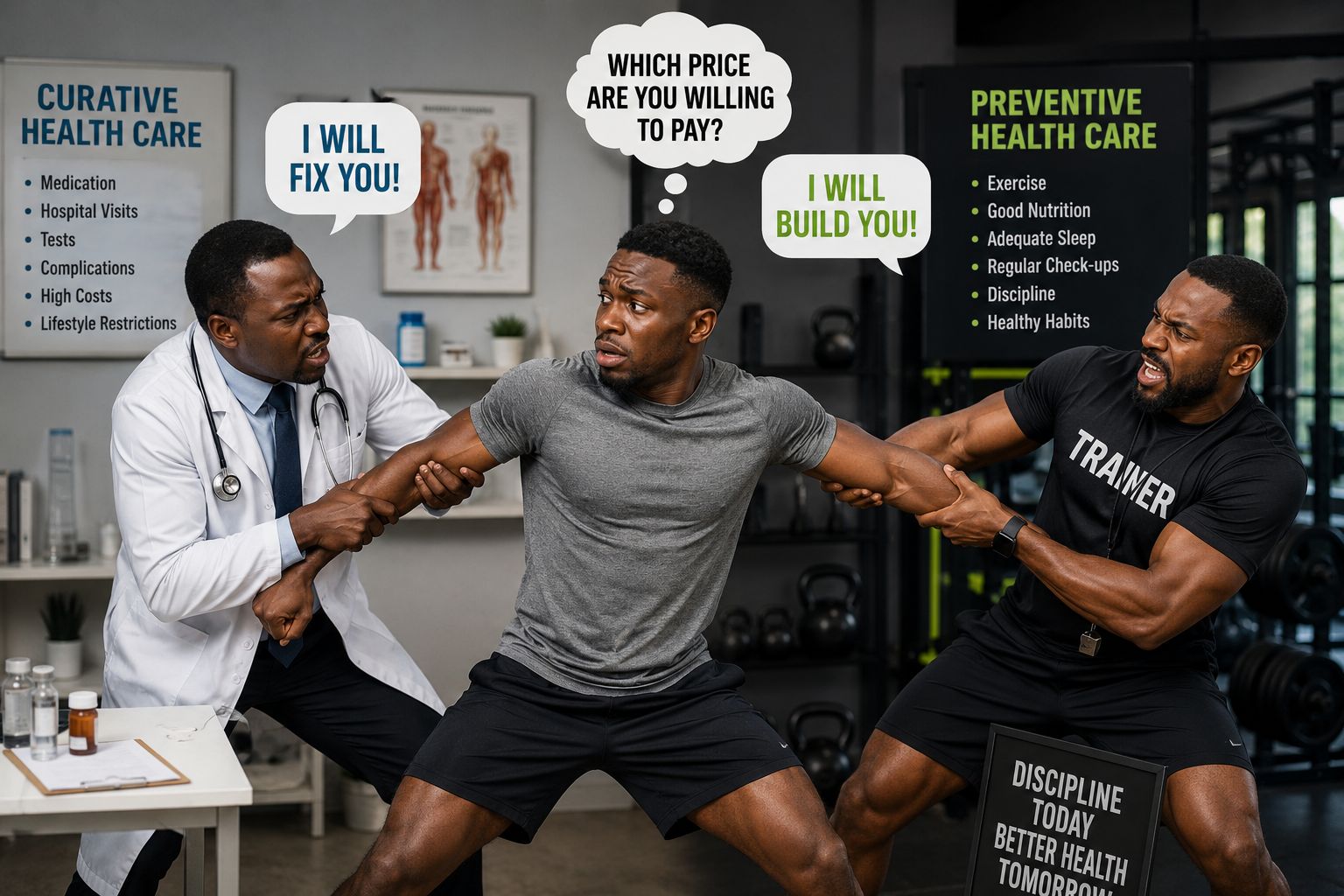
There is a thin line between preventive health care and curative health care—but both come at a cost.
And perhaps the bigger question is:
Which cost are you willing to pay?
Prevention has a price.
Preventive health care sounds simple when we talk about it.
Wake up early.
Exercise.
Go to the gym—or engage in whatever form of physical activity you enjoy.
Watch what you eat.
Reduce excessive sugar and unhealthy foods.
Avoid smoking and excessive alcohol.
Get enough sleep.
Go for medical check-ups.
Maintain a healthy weight.
Sounds easy, right?Not necessarily.
Prevention requires discipline. It requires saying no when everyone else is saying yes. It may mean waking up when your bed is still warm and going for a walk. It may mean choosing water instead of another sugary drink. It may mean reducing foods you love.There are sacrifices involved. And sometimes you may even ask yourself, “Why am I doing all this when I feel perfectly healthy?”
That's the tricky part about prevention. You are making sacrifices today for a problem you may never experience tomorrow.
But curative health care also has a price
Now consider the other side.
Someone develops a lifestyle-related condition and needs treatment. Suddenly, there may be medication to take every day. There may be foods to reduce or completely avoid—not because you chose to, but because your doctor has advised you to. There may be regular hospital visits, tests and monitoring. There may be complications. There may be financial costs. And perhaps most importantly, there may be things you once did freely that you can no longer do in the same way. The irony is that some of the sacrifices we resist making for prevention can eventually become sacrifices we are forced to make because of illness. The difference is that prevention gives you more room to choose.
The choice is not always ours
Of course, we should be careful not to oversimplify this. Not every disease can be prevented by going to the gym or eating well.
Genetics matter.
Age matters.
Environment matters.
Accidents happen.
Some illnesses occur despite people doing everything “right.” And sometimes people simply do not have the resources, information or circumstances necessary to make healthy choices. So this isn't about blaming sick people for their illnesses. It is about recognizing the things that are within our control.
We already know many of the choices
This is perhaps the most interesting part. Most of us already know what we are supposed to do. We know smoking is harmful. We know excessive alcohol consumption can be harmful. We know physical inactivity isn't good for us. We know that constantly eating poorly isn't ideal. We know that sleep matters. We know that carrying excessive weight can increase the risk of certain health problems. We know we should get checked when something doesn't feel right.
The problem is rarely a complete lack of information. The problem is often action.
We want the benefits of good health without paying the price that comes with maintaining it. But health doesn't work that way.
Every choice has a price
This is where my “Dr Kelvin” theory comes in. 😂
Maybe the question isn't: “How do I avoid paying a price?” Maybe the question should be:
“Which price am I willing to pay?”
Preventive health may cost you early mornings, discipline, exercise, dietary changes and saying no to certain habits.
Curative health may involve medication, hospital visits, dietary restrictions, monitoring, treatment costs and sometimes complications. Neither path is completely free. Both require sacrifices.
The difference is that with prevention, you are often paying a smaller price today in the hope of avoiding a much bigger price tomorrow. And that, to me, is the real value of preventive health.
Don't wait for your body to negotiate on your behalf
One of the biggest mistakes we make is waiting until the body forces us to pay attention. We ignore the small signs.
We postpone check-ups. We say, “I'll start exercising next month.”
We say, “I'll change my diet when I start feeling sick.”
We say, “I'm still young.”
But health doesn't always give us a warning before the bill arrives.
Sometimes prevention is simply choosing to take responsibility for the things we can control while we still have the opportunity to do so.
Exercise.
Eat reasonably well.
Sleep.
Avoid harmful substances.
Get appropriate medical check-ups.
Listen to your body.
And when something is wrong, seek professional medical advice rather than trying to diagnose yourself from Google—or from Dr Kelvin.
So, which poison suits you best?
Maybe that sounds like a strange question. But in reality, both choices come with inconveniences.
One asks you to sacrifice some comfort now for the possibility of a healthier future.
The other may require you to sacrifice some comfort later because your health has already demanded attention. You cannot always choose whether illness will come. But you can influence how you treat your body while you have the chance. Preventive health isn't a guarantee that you will never get sick.
Curative health isn't a failure.
And choosing treatment when you are sick is not something to be ashamed of. But if there are things we can reasonably do today to reduce our risk tomorrow, perhaps they are worth doing.
Because at the end of the day, both prevention and treatment have a cost.
The question is:
Which price are you willing to pay? — Dr Kelvin 😂
Disclaimer: This is a personal reflection and is not medical advice. I am not a doctor. For medical concerns, diagnosis, treatment and individual health decisions, consult a qualified healthcare professional.
A Trainer Should Never Stop Learning
Kelvin Njihia Kairu , Kenya Aug 16, 2026
When I started working as a trainer, I thought knowing exercises and how to perform them correctly was enough. With time, I realised that training is much bigger than lifting weights, counting repetitions, or telling someone to “push harder.”
In the few years I have worked with Global Fast Fit, training has been a continuous learning process for me. It has changed the way I look at exercise. I now see it as a very wide field that requires understanding, observation and, most importantly, the willingness to keep learning.
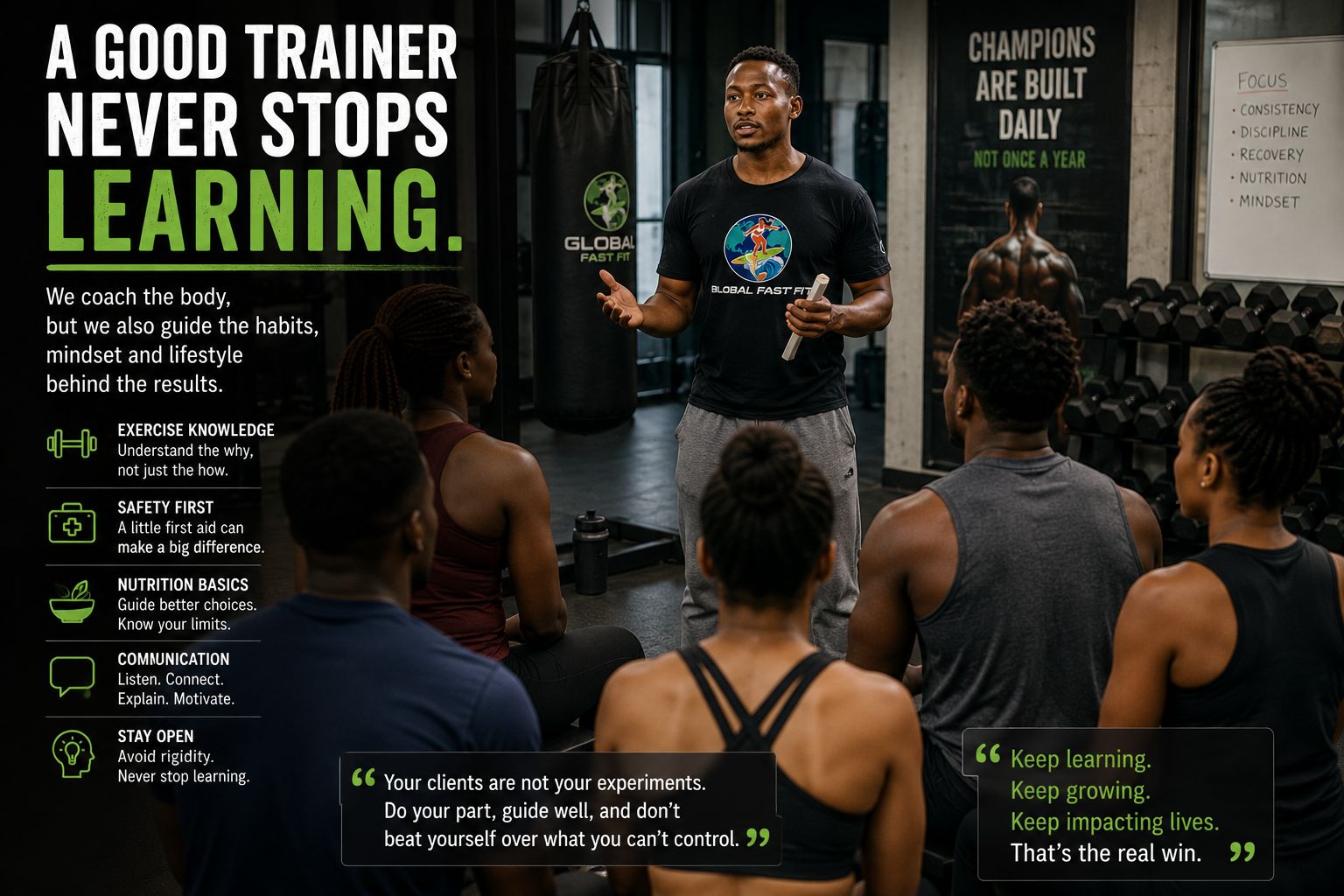
A good trainer needs to understand exercises—not just how to perform them, but why they are being prescribed, who they are appropriate for, how they can be modified, and what adaptations they are supposed to produce.
But exercise knowledge is only one part of the job.
A trainer should have some understanding of first aid and basic safety, a reasonable understanding of nutrition and diet, good communication skills, and the ability to work with different personalities and abilities.
We also need to understand our limits. You don't have to know everything. In fact, knowing when something is beyond your expertise is part of being a good trainer. Sometimes the most professional answer is, “I don't know, let me find out.”
Your client may know more than you think.
We are training in an age where information is everywhere. A client can watch a hundred videos about squats before they ever meet you. They may know about calories, protein, mobility, progressive overload or different training methods.
That shouldn't threaten a trainer.
Instead, it should challenge us to become better.
Clients don't necessarily expect us to know absolutely everything, but they expect us to be competent enough to understand what they already know, correct misconceptions where necessary, and add something valuable to the conversation.
You should be able to sit across from an informed client and have a meaningful conversation—not simply rely on your position as “the trainer.”
Don't become rigid.
Fitness is full of recycled thoughts.
“This exercise is always good.”
“That exercise is bad.”
“Everyone needs this workout.”
“This is the only way to lose weight.”
The more I learn, the more I realise that exercise is rarely that simple.
Every client is different. Their goals, abilities, limitations, lifestyle, experience and response to training can all be different. A trainer therefore needs to observe, question and adapt.
And sometimes, we need to accept that the programme isn't always the problem.
Take responsibility but do not take all the blame
As trainers, we have a responsibility to provide good programmes, educate our clients, monitor progress and give appropriate guidance.But we don't live with our clients.
We cannot monitor what they eat 24 hours a day. We cannot watch how long they sleep. We cannot control whether they follow the programme when they leave the gym. We cannot force someone to recover properly, manage their stress or make better choices every day.
Sometimes a client isn't getting the expected results because of habits outside the training session.
That doesn't mean we should immediately blame the client. We should first ask ourselves whether we have done our part properly.
But once we have genuinely done our part, we also have to accept that the client has responsibility for their own results.
Don't beat yourself up over every outcome you cannot control.
Your job is to provide the knowledge, structure, guidance and support. The client still has to live the lifestyle.
Keep learning
For me, this has been one of the biggest lessons from my time at Global Fast Fit. I have stopped seeing training as simply a collection of exercises. It is a field that demands curiosity.
Read. Ask questions. Observe other trainers. Study the human body. Learn from your clients. Challenge your own beliefs. Keep up with new information. And don't be afraid to change your mind when better knowledge comes along.
Most importantly, remember that being a trainer doesn't mean you have finished learning. It means you have taken responsibility for someone else's learning and physical development.
To my fellow trainers
Don't let the fact that you are called a trainer convince you that you have finished learning.
Your clients are not your experiments, and your confidence should never be greater than your competence.
Keep learning. Keep questioning. Listen to your clients. Accept when you are wrong. Know your limits. Take responsibility for what you can control—and don't destroy yourself over what you cannot.
The best trainer isn't the one who knows everything. It's the one who is committed to knowing more tomorrow than they knew today.
Defying Limits: The Inspiring Story of David Otieno
Kelvin Njihia Kairu , Kenya Feb 27, 2026
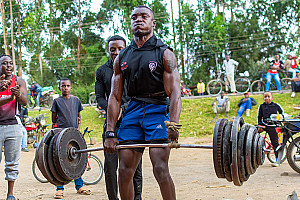
On 31st January 2026, the Global Fast Fit Community Based Organisation hosted a fitness faceoff that brought together 22 competitors from different gyms. It was a day filled with intensity, grit, and determination. But above all, it was a day that reminded us what true strength really looks like.
Among the competitors was David Otieno, representing Palmer Fitness.
By the end of the competition, David had topped the majority of the workouts. He emerged the best overall competitor.
And David was born with symbrachydactyly.
Strength Beyond Physical Form
David began bodybuilding in 2021. His journey has not been defined by what he lacks, but by what he has built — resilience, creativity, and unmatched determination.
Watching him train is an experience in itself.
Dumbbell chest presses? He straps the weight onto his underdeveloped arm and presses with control.
Dumbbell lateral raises? Same method.
Deadlifts — 210 kilograms? He straps in and pulls with perfect form.
Barbell rows? Executed flawlessly.
You might wonder how he maintains proper technique. The answer is simple: mastery. David has mastered his craft. He figured it out. He adapted. He became creative.
A man who can do what many people with both hands cannot do.
More Than an Athlete
Before reconnecting with us at Global Fast Fit, I had met David at an event where he worked as a bouncer. Even then, he carried himself with quiet strength and dignity.
For work, David labors at construction sites. He says he has no option but to work hard. One statement he made during the interview has stayed with me:
“People pitying me will not feed me.”
That is the mindset of a champion.
Despite coming from a humble background, David has risen to become a decorated athlete. He has won titles including:
-
Mr 001 (held in Mombasa, Kenya)
-
Mr East Africa Award
-
Second place in Mr East Africa (People with Disability category)
Yet beyond the awards, what stands out most is his humility.
The Power of Community
During the documentary interviews, I had the privilege of speaking with people who know David closely.
His gym buddies — Fredrick and Paul Indimuli — who are also his childhood friends, shared something powerful: David motivates them. He pushes them. They enjoy training together — and yes, he even beats them in some workouts.
Patrick Kamau, owner and trainer at Palmer Fitness, said:
“The first time I saw David, I could not believe he was lifting weights without a full hand. David has been challenging a lot of people. People stare and wonder how he does it.”
Simon Ndungu from Global Fast Fit, who also competed in the faceoff, admitted he was shocked. Competing with full physical ability and still being beaten forced him to reflect and push harder.
David does not just lift weights.
He lifts standards.
He lifts expectations.
He lifts the people around him.
A Different Perspective on Challenges
One question I asked David was how he felt as a child, growing up and noticing he looked different from other kids. His response was profound: the other children never treated him differently — so he never felt different.
There is something powerful about that.
What I have learned from David’s story is this:
Challenges will always exist. What matters is what you do after facing them. You can sit down and wait for mercy, or you can wake up and work.
There is always a way — but you must be willing to figure it out. Challenges do not just block paths; sometimes they forge new ones. They force creativity. They build resilience. They reveal strength we did not know we had.
Gratitude
I am deeply grateful to Global Fast Fit for giving me the opportunity to listen to and help share such a transformative story. Stories like David’s change perspectives. They challenge excuses. They awaken purpose.
And to David:
Thank you for accepting yourself fully.
Thank you for choosing discipline over pity.
Thank you for showing the world that what looks like a limitation can become a unique advantage.
You are already the best version of yourself.
Sometimes the very thing we think is a weakness is actually a blessing in disguise.
And strength — real strength — is not measured by how many limbs you have, but by how determined you are to use what you have.
A Journey Beyond Borders: Our Global Fast Fit Experience in Uganda
Kelvin Njihia Kairu , Kenya Jan 25, 2026 2
The year 2026 began on a powerful note for us at Global Fast Fit. On 2nd January 2026, we proudly launched the Global Fast Fit Community Based Organisation in Nakuru, Kenya. Little did we know that this milestone would be immediately followed by an even bigger adventure — crossing borders to witness the launch of our sister club, COBAP Boxing Club, in Uganda.
Thanks to the sponsorship and support of Global Fast Fit, our journey officially began on 3rd January 2026.
Hitting the Road: The Journey Begins
Our travel team consisted of Meshack, our Nomads leader; Noxie, the Global Fast Fit Table Tennis Captain; and myself, travelling in the capacity of a Global Fast Fit Ambassador.
The plan was simple — catch a bus from Nairobi via Nakuru. Unfortunately, the bus never showed up. With no time to waste, we improvised and boarded a unit van, an imported vehicle transiting through Kenya to Uganda. Not the most comfortable option, but passion doesn’t wait for perfect conditions.
We departed at 11:00 pm. The van had limited leg space, and discomfort was unavoidable, but excitement overpowered everything. It was my first time travelling to a new country, and that alone kept my spirits high.
Border Lessons and Firsts
The journey flowed through Eldoret, Bungoma, and eventually Malaba, the Kenya–Uganda border. We arrived around 4:00 am, and the real adventure began.
Passport checks, vehicle clearance (since it was an imported van), and one important requirement — a Yellow Fever vaccine, which I had to take at the border. We also exchanged Kenyan currency for Ugandan shillings, immediately noticing the contrast: Kenya’s highest note is 1,000, while Uganda’s goes up to 50,000.
Paperwork done, we crossed over. I was officially in Uganda.
A Different World Across the Border
Almost immediately, Uganda felt different.
-
Heavy military and police presence every few kilometers
-
Traditional brew “chagaa” openly sold — illegal back home in Kenya
-
Fuel sold in roadside stalls, not just fuel stations
-
Lush greenery everywhere — forests, plantations, endless green
Uganda was visibly greener and more rural in feel. We were stopped once by military officers to verify our documents, a reminder that we were in unfamiliar territory.
Along the way, Sanyu Roberts, Head of COBAP Uganda, kept calling to check on our progress — a gesture that already made us feel welcome.
Jinja, the Nile, and Into Kampala
We passed through Jinja, crossed a heavily guarded bridge over the River Nile, and later reached Mukono, a sign that Kampala was close.
After 17 long hours on the road, hungry and exhausted but buzzing with excitement, we finally arrived in Kampala. The country was deep in general election campaign season — streets packed, energy high.
One thing that amazed me: despite heavy traffic police presence and seemingly chaotic bodaboda riding, I did not witness a single accident during my entire stay.
A Royal Welcome at COBAP
After arriving, Sanyu directed us to meet him. We already knew each other from boxing matches in Kenya, so the reunion was warm and familiar.
From there, we headed straight to COBAP Boxing Community — and what awaited us was nothing short of royal.
We were received with overwhelming love and excitement. Brendah “The Ring Beast,” Prince Kimera, Julius, Peter (their media in-charge), and the entire boxing team welcomed us like family.
The launch event featured:
-
Shadow boxing sessions
-
Speeches from important guests
-
The Guest of Honour, the Assistant Chairman of the Uganda Boxing Federation
Then came food — delicious chicken, meat, and local nut-based cuisines that absolutely hit the spot.
Meshack and Noxie later showcased table tennis, sparking huge interest among the boxers. It was beautiful to see sports crossing disciplines and borders.
Rest, Conversations, and Culture
By evening, fatigue finally caught up with us. We found a place to rest, then later chilled with Sanyu, who treated us as we shared long conversations about life, sports, and everything in between.
Uganda left a strong impression on me — peaceful, warm, and full of positive energy.
An Extended Stay & Deeper Connections
On Monday, 5th January, we were supposed to have a quick lunch — pizza and soda — and head back to Kenya. Saying goodbye already felt heavy.
But then came great news: Global Fast Fit decided to extend our stay. Joy doesn’t even begin to describe how we felt.
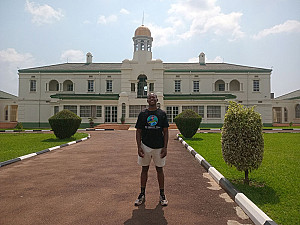
The next day, 6th January, we visited the historic Buganda Kingdom. Much of the history resonated with what I had learned in school — some inspiring, some painful, some violent — but all deeply important.
Later that day, we returned to COBAP to shoot videos and discuss Big Wave Tech, one of Global Fast Fit’s tech franchises. It was a productive and fulfilling day.
One Last Push: Training & Farewell
On 7th January, before heading back, we were given the privilege of training with the COBAP boxers. Let me tell you — it was tough. Brutal endurance, intense discipline, and pure grit. Massive respect to those athletes.
By evening, Sanyu escorted us to the bus station. This time, the bus was comfortable — but my heart was heavy.
Uganda had been incredibly kind to me:
-
The food
-
The positivity
-
The love
-
The people
Leaving felt unreal, but as we know, everything has an end.
Gratitude & A Perfect Start to the Year
Thank you Global Fast Fit for making this journey possible.
Thank you Sanyu, Brendah, Peter, Prince Kimera, and the entire COBAP family for the unforgettable warmth and hospitality.
Your kindness will forever remain in my heart.
We crossed back into Kenya, documents verified, and finally arrived in Nakuru safe and sound.
What a way to start the year.
What a journey.
What an experience.
Global Fast Fit Community Based Organisation: Redifining Health, Fitness And Connection In Nakuru County
Kelvin Njihia Kairu , Kenya Jan 23, 2026
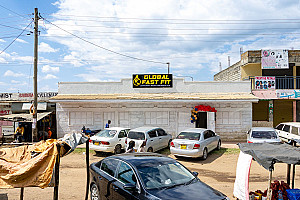
On the 2nd of this year, something powerful was born in Nakuru County — the Global Fast Fit Community, a community-based organization created with one simple but bold mission: to transform community health through movement, mindset, and meaningful connection.
In a world where fitness is often limited to gyms and workouts, Global Fast Fit Community stands out as something far more holistic. It is not just a place to exercise — it is a hub, a movement, and a safe space where people of all ages and backgrounds come together to grow stronger physically, mentally, and socially.
More Than Fitness — A Lifestyle
What makes Global Fast Fit Community truly unique is its diversity of activities designed to cater to different interests, abilities, and fitness levels. Members are not boxed into one way of staying active. Instead, they are encouraged to explore movement in ways that feel exciting and sustainable.
Our community offers:
-
Physical training sessions focused on strength, endurance, and overall wellness
-
Boxing training, promoting discipline, confidence, and mental resilience
-
Cycling club, bringing riders together to explore, train, and build stamina
-
Running club, for those who love to push limits one step at a time
-
Walking club, because health should be inclusive and accessible to everyone
-
Table tennis, where beginners and experienced players can learn, train, and compete
-
Board games like chess and scrabble, sharpening the mind while building social bonds
This blend of physical activity and mental engagement makes Global Fast Fit Community one of the most unique health and wellness hubs in Nakuru County — and truly one of a kind.
Building Health Through Community
At the heart of Global Fast Fit Community is the belief that health thrives in community. People show up not just to train, but to belong. Friendships are formed during morning walks, confidence is built in boxing sessions, strategies are debated over chess boards, and laughter echoes around the table tennis courts.
This is a space where beginners are welcomed, growth is celebrated, and progress — no matter how small — matters.
A Vision for a Healthier Nakuru
Global Fast Fit Community is more than what it is today. It is a growing vision for a healthier, more active, and more connected Nakuru County. By making fitness engaging, inclusive, and fun, the organization is breaking barriers and redefining what community health looks like.
As the community continues to grow, one thing is clear: this is not just a fitness program — it’s a movement.
And this is only the beginning.
Two Years Ago, A Champion Was Born
Kelvin Njihia Kairu , Kenya Dec 26, 2025
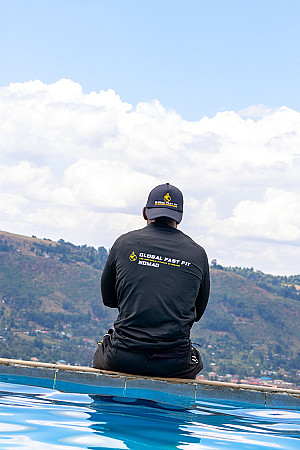
Today marks two years since I became a Global Fast Fit Pro Champion — a day that carries weight, meaning, and emotion for me.I remember that moment clearly: 30 push-ups. 30 squats. 30 plank leg lifts. A 500-meter run. All completed in 2 minutes and 55 seconds.
That record has since been broken — and that’s the beauty of growth. But I will always carry one truth with pride: I was the first person to ever complete it in under three minutes. That moment wasn’t just about speed or strength; it was about believing something was possible before anyone had proven it could be done.
That day, I met Global Fast Fit. And without knowing it, I stepped into a journey that would change my life. Two years later, I look back with deep gratitude. Global Fast Fit didn’t just build my fitness — it built me. It taught me discipline beyond the gym, responsibility beyond the stopwatch, and purpose beyond the title. From office work and report writing, to traveling, running marathons, organizing events, and meeting fitness influencers I once admired from afar — every experience shaped me.
There were moments of fatigue, doubt, and quiet struggle. Moments where growth demanded more than I thought I had. But step by step, task by task, I was becoming something stronger. This journey taught me that being a champion isn’t about holding records forever. It’s about opening doors, setting standards, and inspiring what comes next. Records will always be broken — but being first changes what people believe is possible.
Today, I don’t just celebrate a title.
I celebrate resilience.
I celebrate growth.
I celebrate two years of becoming.
I don’t take this journey for granted — not for a single moment.
Global Fast Fit didn’t just make me a champion.
It made me a trailblazer.
And the journey is far from over.
LESSONS FROM RUNNING WITH ANITA
Kelvin Njihia Kairu , Kenya Dec 23, 2025
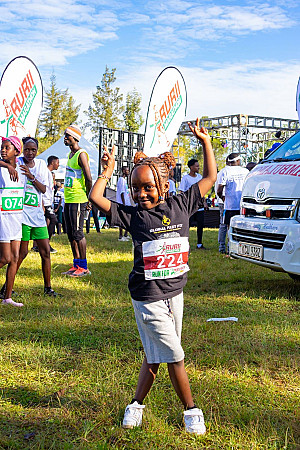
Last weekend, I ran a 10km race with my six year old niece, Anita-and she taught me more about endurance than I expected.It was her first race of this kind, and while she did not run the entire distance non-stop, she ran an incredible 7 km and finished the race. That alone felt like a vicory
Her goal was simple and honest. She kept saying,"I dont want Esther and Abby to finish before me." Both of them had unknowningly become her motivation. There was no pressure, no pace targets- just a clear reason to keep moving forward.
There were moments Anita was tired. Moments when she slowed down, walked or needed encouragement. I learned quickly not to push her too hard. Instead, I listened. We pushed when she neede to, celebrated the small wins and kept going at her pace. The finish line mattered-so did the journey of getting there
At the end of the race, something special happened, Anita was awarded a medal from Joram, The Rurii Marathon organizer. Her face lit up with pride, and in that moment, every step she took made sense.
That day reminded me that progress is not about perfection. It is about effort, heart and knowing when to push-and when to rest. Anita may be six, but she already understands something most adults forget: finishing your own race is what truly matters
I HAVE NEVER MADE IT ON A BILLBOARD.....BUT THIS ONE COMES PRETTY CLOSE
Kelvin Njihia Kairu , Kenya Nov 29, 2025
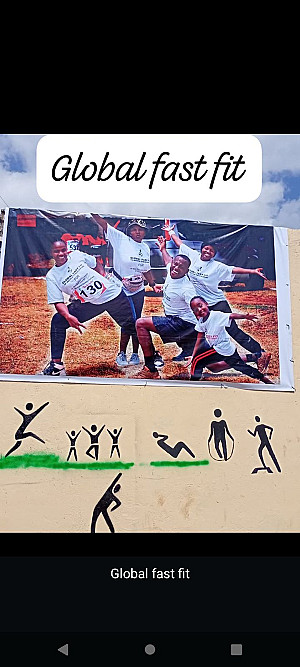
When I first imagined seeing myself on a billboard, It felt like something only reserved for celebrities, influencers or people with far more confidence in front of a camera than myself. While I have not made it to an actual billboard, something exciting happened recently that feels just as surreal: I appeared on a poster and canvas display for our fitness company, Global Fast Fit.
Being part of the Global Fast Fit campaign reminds me of how far I have come, not just physically but also mentally. I used to think that those kinds of moments are for other people but I now realize they are for anyone willing to step into the purpose and say yes to opportunities , even the unexpected ones. It only takes one picture, you never know which it is.
So no, I have not appeared on a giant billboard yet but seeing myself on that poster felt like a reminder that big things often start wiyh smaller, meaningful milestones. and if this is just the beginning, I can't wait to see what's next