 Login with Google
 Signin with Apple
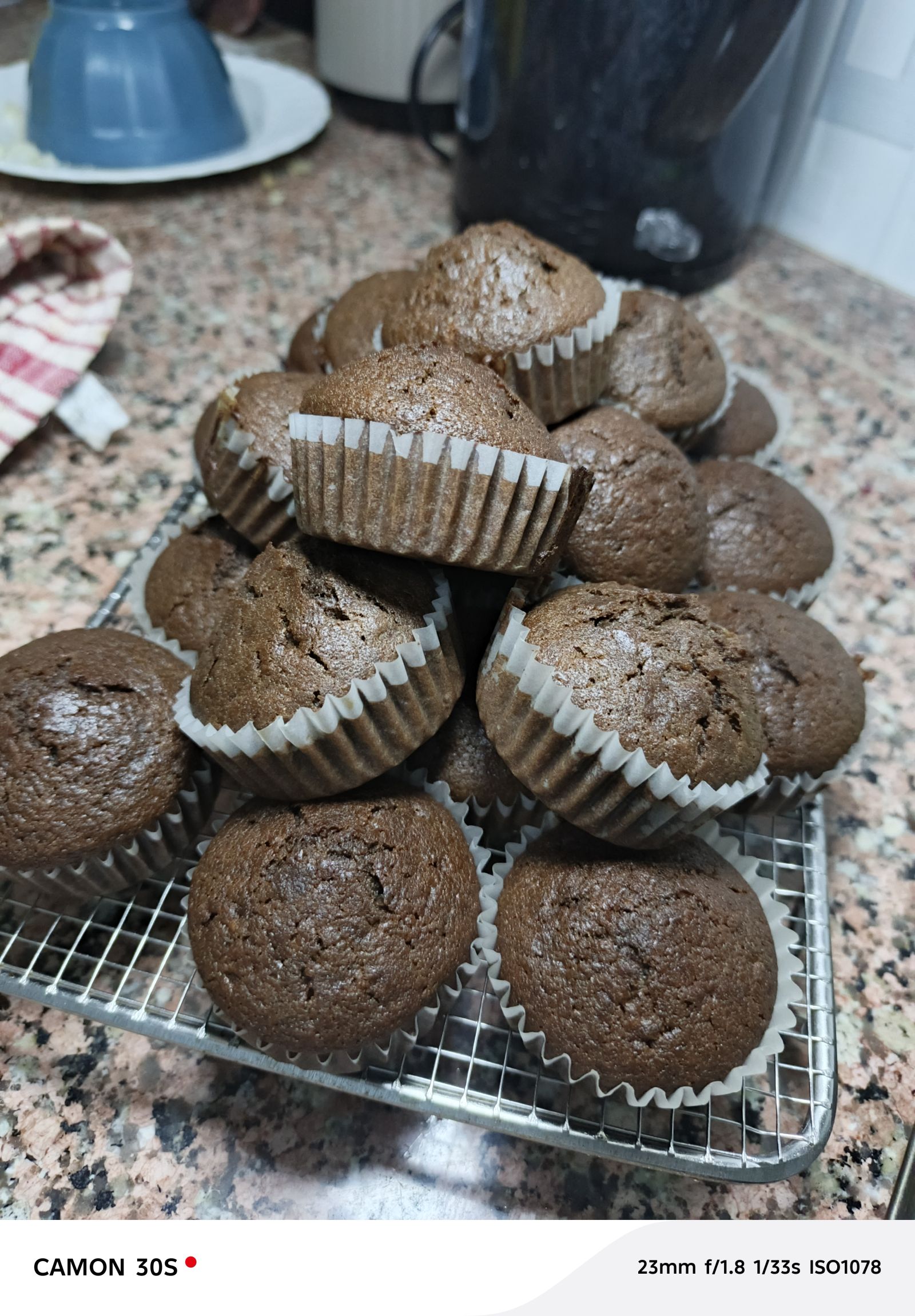
Do AI cookies crumble?
Abigael Rotich , Kenya Aug 23, 2026
AI didn’t teach me how to cook. Knowing how to cook taught me how to use AI to cook.
I have been cooking for a long time. For years, my relationship with recipes was simple: I searched for them. If I wanted carrot cupcakes, pilau, bread, cake, or something I had never made before, I would go online, mostly to YouTube, search for what I wanted, compare a few recipes, choose one, check the ingredient list, and then work backwards from there. Do I have tomatoes? Yes. Onions? Yes. Ginger? No. Vanilla? No. Fine, add those to the shopping list. The recipe told me what I needed, and I went out to find it.
TikTok came later, and although my algorithm seems determined to feed me a recipe every third or fourth scroll, I have learned to be suspicious of TikTok food. Everything looks magnificent in thirty seconds. Butter sizzles. Cheese pulls. Cakes rise perfectly. Someone cuts into something impossibly moist. Then I try it, and more often than I would like, it flunks. So YouTube remained my safer place for recipes. At least there, someone usually had enough time to explain what they were doing. I could see textures. I could watch the batter. I could listen for the little warnings: don’t overmix this, brown that properly, wait until this changes colour.
But even YouTube has limitations. Sometimes you have to watch three or four videos before you find one that suits what you have. Sometimes the recipe assumes ingredients that are easy to find somewhere else but not in your kitchen. Sometimes it is nine at night, the shops are closed, you live far enough from everything that “just pop out and buy some baking soda” is not a realistic suggestion, and your children still need something to eat the next morning. That is where AI changed cooking for me.
But I think I have to go further back to explain why.
Growing up, my mother was not what people would call an impressive cook. She was a full-time nurse raising three children, mostly on her own. My father was a soldier, and when we were young he was away on missions for long periods of time, sometimes years. My mother would leave for work early, finish her shift in the late afternoon, collect us, shop for whatever was needed, get home and start again. We did not have the convenience of walking into the kitchen and turning on a gas burner. We cooked in an outside kitchen. If she got home and the fire was out, the kitchen was cold. Firewood had to be split. A fire had to be lit. Then dinner had to be cooked. There was homework. Laundry. Cleaning. Children to bathe. Clothes and school things to prepare. And somewhere in all of that, she also had to rest because the next morning was coming whether she was ready or not. By nine at night, our house was dark and silent.
So my mother cooked what worked. We had a small rotation of meals. They were healthy. They were fully cooked. They filled our stomachs. There was no garnish, no unnecessary flourish, no culinary performance. The objective was sustenance.
Other people noticed. My aunties, especially those who spent more time at home or had more support in their households, cooked differently. Their food looked different. There was more variety, more presentation, more of what people considered proper hosting. People sometimes joked about my mother’s cooking. I remember the jokes because they hurt me. They would say things like, “Your mother puts in the least effort,” or joke that they wished they could care as little as she did.
Once, my mother made rice, potatoes and beef. She had cooked the potatoes and beef together in one pot. Guests came over and refused to eat. They said they had already passed by Pizza Inn and had pizza. Maybe they had. But as a child, I saw the looks. I understood the joke beneath the politeness. My mother fed us. She gave the visitors tea. We ate the food later.
That stayed with me, because I could see what my mother was carrying even when other people could only see the plate. So when I started learning how to cook properly in my mid-teens, I was not simply learning a nice life skill. I was learning to cook to avenge my mother.
And because I am apparently incapable of doing anything halfway, I may have overcorrected.
When I later went to campus, started working, and eventually lived alone, cooking became something else entirely. I had time. I would come home and make elaborate, sensual meals for one person: me. People in the apartment block would smell the food and knock. “What are you cooking today?”
If I was making pilau, I did not simply pour ground pilau masala into a pot. I would open a packet of whole pilau spices and select what I wanted for that particular meal. I would look for the biggest, healthiest-looking pieces. I would boil water and soak the spices, then sieve them and rinse away the dust. I would dry-roast the whole spices in a pan until the kitchen became fragrant, then grind some of them and keep others whole. I would split open the cardamom pods to expose the seeds and break down pieces that were too large. I would prepare the peas separately. I would sometimes add a little sugar to the water so they stayed bright green, then remove them before they overcooked. The onions had to become perfectly golden brown. The meat had to brown properly.
There was music. There were podcasts. There was nowhere I needed to be afterwards. I could spend an absurd amount of time making dinner and then sit down and eat it by myself. Cooking was craft. It was entertainment. It was pleasure.
Then I got married. Then I had children, very quickly. Then the jobs became more demanding. Life filled up. And slowly, I started approaching the same line my mother had stood on years before. I no longer had endless time to roast spices while listening to music. Sometimes I was tired. Sometimes there were children demanding things from me. Sometimes work had followed me home. Sometimes dinner was not an artistic opportunity. It was 7 p.m. and people needed to eat.
I could feel myself getting dangerously close to cooking purely for sustenance, and I could not let that happen.
The funny thing is that adulthood also made me understand my mother differently. As a child, I thought the enemy of beautiful cooking was lack of skill. Growing up taught me otherwise. Sometimes the enemy is simply time. My mother had not failed to discover the magic of caramelised onions. She had three children, a nursing job, an absent husband, a wood fire and tomorrow morning coming at her very quickly.
Then, somewhere in the middle of my own busy life, I started a snack bar. And that is how AI cooking properly entered my life.
I had been using AI for other things, and while thinking through the snack bar, I started asking it for recipes. Not just searching for recipes. Building them. That was the lightbulb moment. For years, recipes had told me what I needed. AI was the first time I could tell the recipe what I had.
Before, the process might have been: I want carrot cupcakes. Search YouTube. Watch five videos. Compare them. Pick one. Hope. Now the conversation is more like: I have oat flour. I have carrots. I have yoghurt. I have no vanilla. I have no baking soda. I need enough for forty cupcakes. They are for children, so I do not want them very sweet. Make that work.
And it does. Or at least, it gives me somewhere very useful to begin.
That flexibility has completely changed the way I cook. I am very particular about how much sugar my children eat. Commercial baked goods are often ridiculously sweet. I do not need a cupcake designed to make a five-year-old’s eyeballs vibrate. So I can say that. Reduce the sugar. Make this mildly sweet. I only have honey. I have no butter. Can I use yoghurt? I have leftover rice. I have cumin seeds. What can I do with that?
And suddenly I have cumin rice that is so good I wonder why I was ever going to throw the rice away.
AI is particularly good at leftovers because leftovers rarely fit neatly into traditional recipes. You do not search YouTube for, “I have one and a half cups of rice from yesterday, half a capsicum, two eggs, cumin seeds, a tired spring onion and approximately one tablespoon of yoghurt.” But that is a perfectly normal thing to tell AI. It works with the kitchen that exists.
That is the difference. I used to search for recipes. Now I build them.
One of my favourite moments came after I made a batch of oat cupcakes. Someone tried them and could not get enough. He came back for another, and then another, and eventually asked me to pack some takeaway for his wife. As I was packing them, I casually told him, “Did you know this is an AI recipe?”
He looked genuinely surprised. “Really?”
I told him it was an entirely AI-generated oat cupcake recipe.
He said he had never known anyone who used AI to cook.
I loved that reaction, because by that point the cupcakes had already passed the only test that really mattered. He had eaten them, enjoyed them, come back twice, and wanted to take some home. The fact that AI had helped build the recipe only became interesting afterwards.
And I probably cook about 80 percent of my meals with some form of AI involvement now. That sounds strange even to me, especially because I am not somebody who did not know how to cook and then discovered a robot chef. I already knew how to cook. That is precisely why it works.
I can look at a recipe and know when something seems wrong. Two cups of sugar? Absolutely not. That batter is going to be too wet. That quantity of flour will make it dense. That spice needs to bloom first. Those onions are nowhere near ready.
AI cannot smell my onions. It cannot taste my batter. It cannot know whether the oranges I bought this week have unusually bitter rinds. It cannot touch a dough and realise it needs another tablespoon of flour. It does not know that my particular oven runs slightly hotter on one side.
I am still the cook.
And I think that distinction matters. AI has not replaced my judgement. It has removed a lot of the friction around using it. It handles the mathematics of scaling twelve cupcakes to forty. It helps me think through substitutions. It can suggest what to do with ingredients that need using up. It can adjust sweetness. It can help me troubleshoot when the cocoa powder runs out halfway through a baking session. It can give me a starting point at 9 p.m. when the shops are closed, there is no bread for tomorrow, and I am standing in the kitchen looking at oats, yoghurt, carrots and determination.
It does not return me to the version of myself who could spend two hours hand-roasting pilau spices on a random Tuesday. I do not have that life anymore. What it does is help me preserve some of that woman inside the life I have now. The woman who still wants the food to be interesting. Who still wants her children to eat well. Who still likes discovering what happens if she changes something. Who still wants cooking to contain pleasure, not just responsibility.
The snack bar pushed the experiment further because cooking for your own family is one thing. Selling food is another. A home recipe can be slightly different every time. A product cannot. Now the questions become more serious. Can I make it again? Can I scale it? What does one batch cost? Can I substitute an ingredient without destroying the texture? Will children actually eat it? Will someone pay for it twice? And perhaps most importantly: when the AI-generated cookie comes out of the oven, does it actually taste good?
That is where the machine stops being impressive simply because it produced an answer. The kitchen gets the final vote.
Sometimes the recipe works beautifully. Sometimes it needs more flour, less sugar, or a longer bake. Sometimes I take one look at what it has suggested and change half of it before I even start. Which is why, despite how much AI has transformed the way I cook, I do not think the most interesting question is whether AI can write a recipe.
Of course it can.
The more interesting question is what happens when that recipe meets a cook. Because AI can generate the first draft. It cannot taste the cookie. The interesting part is what happens next when a cook can tell the machine, “That batch was too dry. Fix it.”

Sorry, my AI said "No"
Abigael Rotich , Kenya Aug 21, 2026 2
You know how when you were young and you wanted to go somewhere — maybe to eat lunch at your friend’s house, maybe to play, maybe even to go for a sleepover — and then your mother said no? So you had to go back, very helplessly, and say, “Sorry, my mum said No.” That was me in this situation. Except I am now a grown woman helping run a community-based organization, the thing in question was not a sleepover, and the mother who said no was ChatGPT.
This whole thing started very innocently. At Global Fast Fit C.B.O, we had started running regular chess events, and they were slowly getting attention in Nakuru. The events were not huge, but they had life. They had a community feeling around them — children, adults, beginners, stronger players, friendly competition, and the kind of buzz that makes you feel something is growing. Somewhere along the way, a local event-management and ticketing platform noticed what we were doing and approached us with what sounded like a very simple offer: send us your poster, send us your event details, we can advertise and ticket for you.
At first, that sounded useful. As a small organization, you are always looking for more visibility. More people posting your event means more eyes on the poster. More eyes can mean more attendance. The offer sounded like extra support, not a takeover. In my mind, it was simple: we would continue promoting our own events through our own networks, and this platform would also help put the events in front of more people. Let us advertise. Let them advertise. Let everyone bring people. Very harmless, very practical, very “why not?”
But then the simple thing started developing a personality. It was no longer just “send us the poster.” It became “all tickets should go through our platform.” Then it became “all the money should go through us.” Then it became “we deduct our percentage and later remit the balance to you.” That is where the first discomfort started, because anyone who has ever planned even a small event knows that event money is not decorative. It is not just a figure waiting quietly for the event day. It moves before the event. Snacks have to be bought. Some snacks need preparation before the day itself. Branding has to be done early. T-shirts, medals, water bottles, printing, logistics, transport, venue preparation — these things do not wait for the morning of the event.
The other issue was the payment journey. We already had our own paybill. We already had our own community. Many people who attend our events hear about them directly from us — through WhatsApp, friends, family, neighbours, parents, workmates, chess contacts, and people who know the centre. When someone is already in your inbox asking, “I saw your poster, how do I pay?” the easiest and most natural thing is to give them the paybill immediately. You do not want to send them on a long pilgrimage through a third-party link, extra steps, and a different payment process. When someone gets the urge to give you money, you should not create an obstacle course. Some people will tolerate a complicated process because they like you. Others will quietly disappear.
So from where I stood, there was already a mismatch. What we needed was additional visibility and support. What was slowly being requested was control of the ticketing pathway. That difference matters. We were not looking for someone to take over the event. We were looking for more people to help us amplify it.
Eventually, a meeting happened. I attended mainly as the note-taker, which is a role I actually enjoy. I like sitting in the background during these kinds of conversations because I get to observe how people present themselves, how proposals are framed, how negotiations move, and how much is said without being said directly. I am still learning that world, so I like listening. The meeting was meant to clarify what this proposed working relationship would look like, especially because the ticketing arrangement was no longer sounding as simple as it had first appeared.
During the meeting, one thing became clear to me: we needed the offer put in writing. Not because anyone wanted to create unnecessary bureaucracy, but because verbal conversations are too slippery once money starts moving. People forget what they said. People remember things differently. People become very creative with memory when an event starts making money. The right time to disagree is before the event, before the ticket sales, before the sponsors, before the crowd, before the pressure. So the request was simple: send us a written MOU or agreement showing what you want, what you are offering, what you expect from us, and how the money and responsibilities will work.
The meeting ended without a concluded agreement. That part is important. We did not leave with signed terms. We did not leave having accepted the proposed structure. We left with the understanding that a written document would be sent for review. So when the document eventually arrived, I treated it as a draft. A proposal. Something to be read carefully before any decision could be made.
Then the document came.
And my goodness.
The audacity arrived in PDF form.
What I expected was maybe a simple MOU: here is the event, here is what we will do, here is what you will do, here is our fee, here is when money will be remitted. What arrived was a long, formal agreement with clauses on ticketing, gate verification, refunds, insurance, liability, permits, data protection, event safety, crowd control, cancellations, branding, complimentary guests, deductions, and responsibilities. It was no longer giving “send me the poster.” It was giving “welcome to the legal department.”
I read it. Then I read it again. I wrote notes in my book. I tried to break it down clause by clause, but the document had so much legal language that parts of it kept slipping past me. I understood maybe 65% of it, but the remaining 35% was making me deeply uncomfortable. It felt like being insulted in a language you do not fully understand. You may not know the exact words, but your spirit knows something has happened. That was the feeling. I could not explain every clause perfectly, but I knew the agreement was not as innocent as the original offer had sounded.
So I did what any modern manager operating slightly outside her expertise might do. I took it to ChatGPT. Not to make the decision for me, not to replace a lawyer, not to become the board of directors, and not to give the final word on behalf of the organization. I needed a first layer of translation. I needed the kind of help you ask from that lawyer friend you wish you had in the room — the one you call and say, “Please read this thing and tell me what I am actually agreeing to.”
That is where the story became funny to me, because ChatGPT did not scream. It did not dramatize. It did not say, “Run.” It calmly translated the agreement into plain English, and the more it explained, the more the answer became obvious. Clause by clause, the document stopped looking like a simple ticketing support proposal and started looking like a risk-transfer ceremony. The ticketing company would handle ticketing, ticket verification, ticket reports, and ticket proceeds, but GFF would remain responsible for most of the things that could go wrong.
In plain language, the agreement was saying that they would collect ticket money, deduct fees, control the ticketing process, and later remit the balance. Meanwhile, we would carry the burden of the actual event: permits, venue safety, insurance, refund exposure, crowd control, complimentary guest lists, gate arrangements, data duties, legal compliance, and operational risks. The 6% fee itself was not even the main issue. The bigger issue was the position the agreement placed us in. They held the platform, the money pathway, and the protective clauses. We held the event risk.
That is when my AI mother said no.
Politely. With reasons. But no.
The funny part is that the original offer had been so casual. It started as “send us the poster.” By the time the agreement was translated into ordinary language, it had become “all money passes through us, we deduct our percentage, we pay later, you carry the event risk, and here are several clauses about permits, insurance, refunds, data, liability, and safety.”
And this is where the management lesson became bigger than the document itself. Many small organizations are vulnerable in exactly this way. Someone approaches you with what sounds like an opportunity. The language is friendly. The offer sounds useful. The other party appears experienced. Then a formal document arrives, and because it looks professional, you feel pressure to treat it as reasonable. Sometimes you even feel embarrassed to admit that you do not fully understand what you are reading. That embarrassment is dangerous, because people do not only sign bad documents because they are careless. Sometimes they sign because the other person sounds confident, the document looks official, and they do not want to look difficult.
This is why I appreciated having AI as a first layer of protection. It did not replace judgment. It improved judgment. It slowed me down. It turned legal language into operational language. It helped me see where the money was flowing, where the risk was sitting, where the power was being placed, and where the agreement did not match the original conversation. It helped me move from vague discomfort to specific questions. That is a very useful management tool.
The relationship eventually wrapped itself up quietly. We did not proceed with that agreement. The person later attended one of our events as a participant, not as our ticketing provider. He paid, played, and left. And that was fine. Not every conversation has to become a partnership. Not every opportunity has to be accepted. Sometimes the most important outcome of a meeting is learning what not to enter.
The lesson was not that ticketing platforms are bad. They are not. For the right event, with the right terms, they can be very useful. The lesson was also not that AI is a lawyer. It is not. The lesson was that as a growing organization, we need document literacy just as much as we need programs, events, sponsors, and ideas. A partnership is not a partnership just because the language is polite. A document can smile at you while quietly moving all the chairs in the room.
So now I have a new management habit. When something looks official but feels strange, I do not panic, and I do not pretend to understand. I read it slowly. I translate it. I ask what each clause means in real life. I check where the money goes. I check who carries the risk. I check who has control. I check whether the document matches the conversation that came before it. And when necessary, I go back with my newest excuse in the book:
Sorry, my AI said no.
https://docs.google.com/document/d/138EH7eB-leoGZF-tlnHK0zD-_OSdbGjiFK7UZbt5k40/edit?usp=drivesdk

The Universe's tool of choice is Violence.
Abigael Rotich , Kenya Mar 23, 2026 1
Global Fast Fit hiking club had me at the top of Mt Longonot.
Mount Longonot is a dormant volcano located in the Great Rift Valley near Lake Naivasha, rising to an elevation of 2,776 meters. It is a popular hiking destination featuring a 3.1 km steep ascent to the rim and a 7.2 km loop around the 1.8 km wide crater, offering scenic views, with a total hike time of 3-6 hours. Admittedly, it is not too long but it is very steep. As we went round the rim of the volcano, I was treated to stunning panaromic views including 3 different rainclouds, in three different areas, pouring rain and thunder. It felt God like. My mind started to drift.
As you hike the trail, If you have a good pair of lungs and native Kalenjin legs carrying you, like I do, then you will use 50% of your energy going up the mountain and the other 50% noticing the memory of a massive volcanic eruption a long time ago. The long fissures on the ground, the lava flow remains, the deep crater left, the abundant ecosystem that has laid claim to these remains and attempt to hide the extent of damage done on this mountain by a violent series of eruptions. The eruption solidified its name, Oloonong'ot, as it created dramatic, rugged spurs and steep ridges that still define the mountain today- Mountain of Many Spurs.
I started to think about how beginnings are rarely soft. Even life itself has painful, forceful beginnings. The universe does not favor gentle beginnings. Its tool of choice is the violent burst: rupture, pressure, tearing, collapse, eruption, burning, breaking. Beginnings are often misremembered as hopeful, peaceful, glowing things but when you actually look closely, many beginnings are brutal.
A new life does not drift quietly into the world. Child birth comes through contractions, pressure, tearing, blood, pain, and immense force. For the chick to begin its life in the world, it must strike, crack, and break the very structure that once protected it. A seed does not grow by staying whole, the casing splits, the contained form breaks, and only then can roots and shoots emerge. New land can be born through volcanic explosion. The eruption looks destructive, yet it is also creative, laying down the material for future ground. Floods are feared for their force, but they also carry and spread rich sediment that later supports healthy regrowth. Forest fire consumes, but it also clears dead matter, opens cones, returns nutrients to the soil, and creates conditions for regrowth. Even something as fluid as water begins new landscapes through relentless force. Over time a river cuts, wears down, and reshapes stone itself. A butterfly emerging from a chrysalis is not neat. The butterfly must struggle out. The emergence is effortful because the struggle itself helps form what is needed for flight. Ease would actually interrupt development. Muscle develops when strain creates tiny tears in tissue, which the body then repairs into stronger form. An island may begin in hidden violence, with magma forcing its way upward beneath the sea. A beautiful island paradise begins in fire, pressure, and upheaval.
Inner life follows the same pattern. A person often does not awaken gently. Awareness begins when a lie fails, when denial can no longer hold, when an inner structure cracks. A new mind begins in the ruins of a false one. Often, emotional healing begins with emotions like anger, shame, confusion, pain or conflict.
I think the energy feels violent because beginnings are rarely clean. They are crowded with tension, uncertainty, and force. They push matter, body, time, or self out of one form and into another it is not just the start of something but rather, a rearrangement of something already in existance. This kind of change must have friction. It must cost something. One state has to break so that another can exist.
Maybe we suffer partly because we keep expecting beginnings to feel gentle when the pattern all around us suggests they are often scorching.
It was a calming thought. The hike may have been tough but I felt warm. I realized that the we often dread the intensity, the instability and the disruptive nature of life in general and use a lot of time and effort to keep things the way they are. But the universe is much bigger and stronger and will have its way every time. The universe concentrates force to break one form so that another can begin. So I do not need to mistake intensity for failure but, to stay steady enough to be remade as need be.
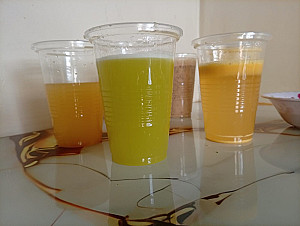
GFF Snack shack
Abigael Rotich , Kenya Feb 26, 2026
This is a 500ml Standard Serving Analysis, for a snack shack we recently made at the GFF CBO in Kenya. We used big wave tech, a free AI helper and asked it to give me recipes for each smoothie that I made. We used the recipe to make a shopping list, then make the recipes, taste them and give a review for each.
1. Banana Peanut Power Smoothie
Ingredients (500ml):
1 banana, 25g peanut paste, 250ml milk, 1 tsp honey.
Cost per 500ml:
Budget: 67 KES
Actual: 70 KES
Proposed Selling Price: 120 KES
Nutritional Value:
Approximately 425 kcal per serving. This smoothie provides a strong combination of carbohydrates, healthy fats, protein, and potassium. It offers sustained energy and high satiety, making it suitable as a meal replacement or recovery drink.
Notes:
This smoothie is easy to source and simple to prepare. Its thickness makes it filling and satisfying, though slightly heavy if consumed quickly. Ingredient stability makes it reliable for scaling production. However, the bananas available to us are very sugary. The teaspoonful of honey was excessive. The smoothie did not need sweetening. The peanuts gave the smoothie a nutty twist which did well to make the smoothie balanced as banana becomes boring quickly.
Suggested retail Name: The Power pour
Rating: 8/ 10
2. Mango Yogurt Recovery Smoothie
Ingredients (500ml):
1 mango, 200ml yogurt, water to volume, 1 tsp honey.
Cost per 500ml:
Budget: 105 KES
Actual: 115 KES
Proposed Selling Price: 180 KES
Nutritional Value:
Approximately 275 kcal per serving. Provides carbohydrates for quick energy and probiotics for gut health. Moderate calorie density with a refreshing profile.
Notes:
Visually appealing and smooth in texture. Slightly higher ingredient cost due to yogurt but carries strong perceived value. Easy to blend and well suited for general consumers. The yoghurt in the smoothie overshadowed the mango in both flavor and smell, which should have been the star of the show. I would recommend that we reduce the yoghurt. It is mango season in Kenya and the mangoes are luscious and delicious thus, we do not need the teaspoonfull of honey.
Suggested retail Name: Velvet mango
Rating: 6/ 10
3. Hard-Boiled Egg Pair
Ingredients:
2 eggs, pinch of salt.
Cost per serving:
Budget: ~30 KES (estimated)
Actual: 42 KES
Proposed Selling Price: 100 KES
Nutritional Value:
Approximately 140 kcal. High-quality complete protein with strong satiety and minimal sugar. Excellent protein-to-cost ratio.
Notes:
Requires advance boiling and cooling but no blending equipment. Simple, efficient, and nutritionally powerful. Shelf life must be monitored carefully.
We have had a snack in Kenya called ‘mayai pasua’ since the inception of the country and it is a twist of the humble boiled egg. You take a hot or warm hard boiled egg, split it down the middle, add a tablespoon of ‘kachumbari’ , throw in a pinch of salt and enjoy a very delicious snack. If you are extra like me, bring a bit of ketchup or any favorite sauce and enjoy. One is never enough!
Suggested retail Name: Mayai pasua
Rating: 10/10 - Mayai pasua
6/10 - plain salted boiled egg
4. Peanut Oat Energy Cup
Ingredients (500ml equivalent serving):
40g oats, 20g peanut paste, milk or water, 1 tsp honey.
Cost per serving:
Budget: 82 KES
Actual: 75 KES
Proposed Selling Price: 130 KES
Nutritional Value:
Approximately 380 kcal. Provides slow-release carbohydrates combined with healthy fats for prolonged energy and fullness.
Notes:
Very filling and cost-efficient. Requires soaking or softening time. Suitable for structured meal support rather than quick refreshment. Oats are an acquired taste for most Kenyans as it is not readily available for us and quite pricy. This was a first time for a majority of us, seeing, preparing and tasting oats. I had very low expectations for it but the scent from toasting the oats was very appealing and the snack was a pleasant surprise. I also recommend that it be eaten hot.
Suggested retail Name: Oat and nut cup
Rating: 7.5 / 10
5. Lemon Ginger Hydration Drink
Ingredients (500ml):
Juice of 1 lemon, small ginger portion, water, small honey.
Cost per 500ml:
Budget: 20 KES
Actual: 20 KES
Proposed Selling Price: 80 KES
Nutritional Value:
Approximately 30 kcal. Very low calorie, supports hydration and digestion. Minimal sugar content.
Notes:
Extremely affordable and easy to produce in bulk. Light and refreshing with minimal preparation complexity. We expected a bitter and tough drink; in lesser words- a healthy drink but were pleasantly surprised by the fresh flavour of this drink. It was not bitter at all. It had a kick to it and instantly cooled you down. In Kenya, we have a boiled version of this drink called the 'dawa drink'. It is highly popular and quite a potent remedy for cold, flu, allergies and, used by choir members to keep their voices as sparkling as the drink.
Retail Name: Citrus splash
Rating: 9 / 10
6. Passion Fruit Refresher
Ingredients (500ml):
1 passion fruit, water, small honey.
Cost per 500ml:
Budget: 30 KES
Actual: 30 KES
Proposed Selling Price: 90 KES
Nutritional Value:
Approximately 32 kcal. Light hydration option with vitamin C and mild natural sweetness.
Notes:
Aromatic and vibrant in flavor. Affordable and simple to prepare, with strong local appeal. The drink has an alluring scent that fills up the room and sets you up for a fall. The flavor is muted and excellent for hydration. However, it is not the passion fruit season and the fruits are hard to source and expensive.
Retail Name: Tropical Splash
Rating: 5 / 10
7. Pineapple Mint Cooler
Ingredients (500ml):
Pineapple portion, mint leaves, water.
Cost per 500ml:
Budget: 60 KES
Actual: 50 KES
Proposed Selling Price: 110 KES
Nutritional Value:
Approximately 80 kcal. Provides vitamin C and hydration with a cooling effect.
Notes:
Requires fruit cutting but remains straightforward. Refreshing profile suitable for warm environments. The fruit has a great color and a strong fresh refreshing scent to it. It was my personal favorite and my first time buying, smelling and using mint. The drink blends well but is difficult to sieve as it creates a smooth almost gum-like paste that collects at the bottom of the sieve. It was worth the hassle.
Suggested retail Name: Pine mint cooler
Rating: 9 / 10
8. Banana Oat Shake
Ingredients (500ml):
1 banana, 30g oats, milk or water, 1 tsp honey.
Cost per 500ml:
Budget: 75 KES
Actual: 70 KES
Proposed Selling Price: 120 KES
Nutritional Value:
Approximately 360 kcal. Combines fast and slow carbohydrates for sustained energy with moderate fullness.
Notes:
Balanced and affordable. Slightly thick but generally well tolerated. Good middle-ground energy option. Most of us did not know what to expect with our minimal experience with oats but this was also a great snack. It did not need the honey. The banana was adequately sweet.
Suggested retail Name: Golden Grain Shake
Rating: 7 / 10
9. Avocado Energy Cup
Ingredients:
1 avocado, lemon pinch, salt.
Cost per serving:
Budget: ~40 KES (estimated)
Actual: 57 KES
Proposed Selling Price: 130 KES
Nutritional Value:
Approximately 240 kcal. Rich in healthy fats, supports sustained energy and satiety with minimal sugar.
Notes:
Premium feel with creamy texture. Ingredient cost fluctuates seasonally. Requires careful ripeness management. It is not avocado season here so the avocado was hard to source and expensive. There were very divided and contrasting views on this snack as avocado is quite popular in Kenya. A group of us loved the added twist of lemon but a fraction of us hated the twist and argued that avocado is sacred and should not be besmirched with the likes of lemon. It should be enjoyed plain and simple.
Suggested retail Name: Green gold
Rating: 7.5 / 10 - The ones who loved the lemon flavored avocado
2/10 - Avocado purists.
10. Orange Recovery Drink
Ingredients (500ml):
2–3 oranges, water, and pinch salt.
Cost per 500ml:
Budget: 32 KES
Actual: 62 KES
Proposed Selling Price: 120 KES
Nutritional Value:
Approximately 150 kcal. Provides natural sugars for quick energy and electrolytes for hydration.
Notes:
Bright and refreshing. Cost varies with orange pricing. Easy to produce but sensitive to market fluctuations. This was an acquired taste for all of us since it was salty orange juice. It had mixed reactions, some liked it others did not. I would love this in a water bottle, diluted in drinking water for a hike or cycling long distance. It is an extravagant snack as it needs a lot of juicy delicious oranges to be squeezed up to make just one glass of it. It smells amazing.
Suggested retail Name: Citrus Charge
Rating: 6 / 10
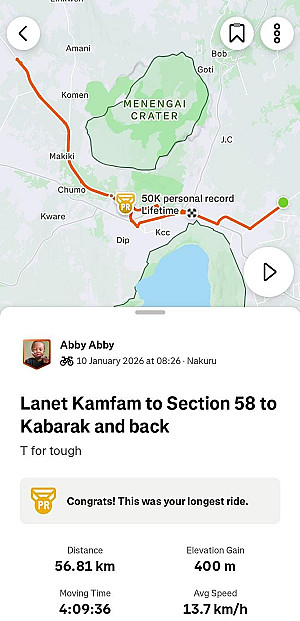
Little Miss Endurance
Abigael Rotich , Kenya Jan 23, 2026
I went for a bike ride and covered a total of 56.81 km in one day. My parents named me Abby, but you can call me Little Miss Endurance.
I love cycling. I think it is an excellent way to keep your weight in check, clear your mind, and build endurance. This ride proved all of that—and then some.
On that day, I covered 56.81 km, with a total elevation gain of 400 m, and a maximum elevation of 2,026 m. My average speed was 13.7 km/h, my fastest speed was 40.8 km/h, and my slowest was 4 km/h. My moving time was 4 hours, 9 minutes, and 36 seconds, not counting the several breaks I took along the way.
The experience was T for tough. I ended up with knee pain that lasted three days.
You may wonder how I ended up in this situation in the first place. Well, I saw an ad on TikTok—the social media platform. It said “Beginner-friendly bike ride.” I thought to myself, I am a beginner, I have a bike, I ride every day. This is the event for me. I showed up with a friend and was extremely pumped.
I did have a premonition, which I pushed deep down into my stomach, and instead chatted excitedly with the cyclists as they gathered into a big crowd outside the KFC Hyrax. We started the journey at a light pace, crossing town in single file, led by the cycling patron. It was breezy and calm—so calm that my mind drifted and I collided with the person in front of me while thinking about a pasta dinner I was going to make for my kids, using cheese that had overstayed in the fridge.
Around the 14 km mark, the ride started to get hard. We hit a steep incline. I was still pumped and pedaled on, determined. The incline had a brief flat section before turning into another steep climb. That’s when doubt started creeping in. By the time we reached the 28 km mark, after clearing the last steep incline, I regretted my choices that day. I really should not have come. I wondered if anyone would notice if I quietly turned back and went home—but the friend I had come with was right behind me and would not allow me to quit.
The next 6 km had softer inclines, and somehow, I made it to our destination. We took photos and ate a late lunch. By then, my knees were already starting to ache. Then we began the journey back. It took just 4 km before I had to stop by the side of the road, get off my bike, and lie flat on my back on the grass. Five other people joined me. My knees were killing me. We rested for about ten minutes and then, very reluctantly, got back on our bikes.
The worst part about the journey was this: even if you quit, you cannot leave your bike in the wilderness. You still have to ride back home. Thankfully, the return ride had more declines than inclines, and those were genuinely fun. Speed, wind, gravity—it almost made you forget the pain.
But let me say this clearly: they lied on that ad. That was not a beginner-friendly bike ride.
It was one of the toughest things I have ever done.
But I did it.
Because I can do anything.
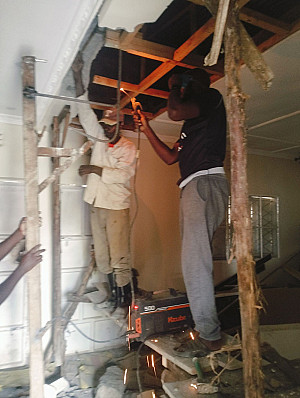
Time costs more than concrete
Abigael Rotich , Kenya Dec 17, 2025
The Global Fast Fit Movement and Wellness center is now in existance. An idea concieved in our minds, discussed in many meetings and finally renovated with our very hands.
When we began the renovation of the wellness center, there was a clear budget, a defined scope, and an optimism that comes with imagining something finished before it exists. We know that failing to plan is planning to fail. So we planned everything in advance; the walls that needed to be torn down, the tiling, the painting the washroom repairs, the plumbing and electrical work, the furnishing and branding. We were so confident, we even started planning for an opening date. The costs made sense on paper. Materials were priced, labour was estimated. Concrete, tiles, fixtures- everything had a number attatched to it.
Time did not.
As the build progressed, it became clear that time was not a neutral backdrop to the work. Each additional day on site quietly translated into more money spent. Labour extended. Supervision repeated. Materials sat longer than planned. Small delays made room for bigger ones. The budget didn’t break all at once—it thinned gradually, stretched by time itself.
Time, I learned, costs more than concrete.
What made this especially complex was that the rising costs were not driven by extravagance or neglect, far from it, this project was like a third baby for us. We are even considering doing a ngemi for the opening ceremony, just like we do after the birth of a child. But I digress. The rising costs were the result of subtle, reasonable choices made over a long period. Work continued, but momentum slowed. Progress became less linear. The longer the project took, the more it asked of everyone involved—financially, mentally, and emotionally.
One of the quieter forces shaping this timeline was perfectionism—not as a personal trait, but as a way of working that often enters construction spaces unnoticed.
Perfectionism usually arrives with good intentions. It values quality, precision, and durability. In a building meant to last, these qualities matter. But when perfectionism becomes the primary driver rather than a supporting principle, it changes the relationship with time.
Functionally complete work is revisited. Minor details are refined again and again. Decisions pause while better options are explored. Progress slows, not because the work is poor, but because finishing feels premature. Perfectionism doesn’t look like delay—it looks like care. It is care.
And yet, each refinement carries a cost.
Time stretches. Labour extends. Momentum softens. The project remains open long enough for new risks to emerge, new changes to feel necessary, and new expenses to appear. Instead of moving forward, the work begins to circle itself. The longer it lasts, the more opportunities there are to notice what could be better.
Perfectionism thrives in extended timelines.
What struck me most was how this played out in the context of a wellness center. We were creating a space intended for grounding, healing, and regulation—yet the process itself was often tense and consuming. Decision fatigue set in. The desire for completion began to outweigh the desire for precision. Peace slowly became more valuable than savings.
This experience reshaped my understanding of quality. Excellence does not always come from endless adjustment. Sometimes, it comes from knowing when something is good enough to move forward. Good enough is a triggering word to high achievers. They or rather we, want the best of the best. A space does not need to be flawless to be safe, functional or meaningful. But it does need to exist.
Time, once stretched, does not stay empty. It fills—with cost, with stress, with lost opportunity. And in the end, it becomes the most expensive material on site.
If this project taught me anything, it is this: protecting momentum is as important as protecting standards. Because while concrete sets and hardens, time keeps moving—and it charges for every extra day.
The gentle art of getting by.
Abigael Rotich , Kenya Nov 12, 2025
There is always a day that is straight from the pits of hell. Nothing seems to work, anything that can go wrong, does go wrong. You find yourself in a funky mood.
This affects your productivity because your brain activates your emotional alarm system and switches off the part of your brain that handles planning, focus and decision making. This way, you start to self protect and react instead of thinking clearly.
Cortisol and adrenaline rise when you are in emotional distress. They make you anxious and jittery. These are great for running away or fighting but not good for concentration. Your working memory fills up with emotional clutter, replaying thoughts of regrets and worries, leaving less space for tasks or creativity. In this state, even small tasks feel difficult because your brain is using energy to try and calm you down. You are tense, you feel low, your attention splinters, you second guess yourself, you rush or procrastinate tasks. All this affects your productivity.
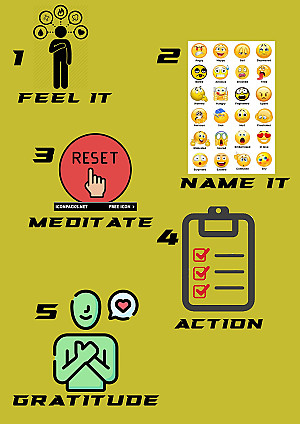
This is a fast track to composure on demand.
-
Feel your feelings.
There are no right or wrong emotions. People who accept their negative emotions without judgment experience lower levels of anxiety and depression over time. This is because acceptance interrupts the cycle of suppression → rebound → intensified emotion. Instead of wasting energy fighting feelings, the body calms down faster. When you hide anger or sadness, the threat detector in your brain stays activated — the body thinks danger is ongoing. Accept any emotion and sit in it for just a moment.
-
Verbalize the emotion
Give a name to what you are feeling and what you want to feel. Give multiple names to what you are feeling. Simply naming a feeling (“I feel angry,” “I feel sad”) reduces activity in the emotional centers in your brain and increases activity in the brain’s calm, logical control center. Go further and verbalize what you want to feel. This process is called affect labelling. You calm the emotional brain by turning sensations into language.
-
Meditate
Breathe, ground, and center yourself. Meditation can range from a few minutes to hours. This is a 5 minute reset guide that you can use on the go.
Step 1: Physical release
-
Stand up.
-
Inhale deeply through your nose for 4 seconds, exhale forcefully through your mouth.
-
Roll your shoulders back and down, stretch your arms wide, shake out your hands.
-
If you can, do 20 jumping jacks, jog in place, or just swing your arms and legs loose.
Step 2: Ground and reset
- Sit down and place your bare feet flat on the ground or floor.
-
Inhale slowly for 4, hold for 2, exhale for 6.
-
Name 5 things you can see, 4 you can touch, 3 you can hear, 2 you can smell, 1 you can taste.
This brings you back to the present moment and helps your nervous system settle.
-
Act
Take one calm, deliberate action. This will refocus your mind.
“What is one thing I can do right now that would make the rest of my day/night feel easier?”
Pick just one—maybe replying to one message, finishing a small task, or starting a playlist and tidying your workspace. Once you start, momentum will build.
-
Gratitude: A natural antidepressant.
End with appreciation for what’s steady and good. Gratitude rewires the brain to notice the abundance instead of lack. Just like love, gratitude is a practice.
Gratitude as a practice is one of the most studied emotional habits in psychology, neuroscience, and even physiology. Gratitude activates the part of the brain involved in processing reward, empathy, and emotional regulation. Regular practice trains the brain to scan for positives instead of threats. Gratitude activates the same brain regions as pleasure, trust, and reward. This triggers dopamine and serotonin release, the same neurotransmitters targeted by antidepressants.
Over time, a gratitude habit creates new neural pathways that make it easier to feel content and balanced. In all seasons, gratitude acts as a mental anchor. It doesn’t deny hardship — it adds balance by reminding the mind of what’s still working, still present and still beautiful.
The practice of gratitude.
-
Grab a piece of paper.
Any page will do — a notebook, journal, or even a loose sheet. Keep it simple and accessible. -
Write down 8 things you’re grateful for.
Don’t overthink it.
Include anything that brings you comfort, joy, or relief — big or small. It could be; your mother’s love, a delicious cup of tea, a peaceful moment alone, or even a really good bowel movement!
Gratitude is about presence, not perfection.
-
For each item, add a short explanation.
Just a line or two about why you’re grateful for it.
-
End each line with the phrase:
“I am very grateful for…” -
Read your list out loud when you’re done.
Feel the warmth, calm, and appreciation settle in.
-
Keep your gratitude notes private.
This is your secret practice, just for you.
Never let anyone read your notes — not because they’re shameful, but when you know someone might see them, you risk becoming performative, writing what sounds good instead of what feels true. Honesty is what gives this practice its healing power.
Keep your notes safe. Fold them away. Hide or even burn them later if you wish.
What matters most is that they are real, not polished.
Examples;
“I am grateful for the warm shower that I had today. I have always loved taking baths. I am grateful that I have a hot shower and plenty of water.”
“I am grateful for my home. A lot is going on in the country right now and so many people have lost their homes and a lot more to floods. I have my home intact. I am very grateful for this.”
“I am very grateful that my son’s eczema is contained. It was a source of anxiety for me but now he is well. I am very grateful for this.”
“I am so grateful for my life now. I am just starting to live for myself and I am loving it. I am stepping into the spotlight as the main character of my life and it feels like a breath of fresh air, unlike this paper which smells like cat pee.”
No day is too messy, no emotion too strong. With feeling, naming, grounding, acting, and gratitude, you have the tools to reset your mind, calm your body, and reclaim your focus — anytime, anywhere.

Big little Journeys: The graduating class of Lisam Junior Academy 2025
Abigael Rotich , Kenya Oct 24, 2025
Every year, a new group of young faces takes a small but mighty step forward — from the comforting rhythm of kindergarten to the exciting world of grade school. For the 2025 class of Lisam Junior Academy, this transition is more than a milestone. It’s a story of growth, discovery, and the remarkable transformations that happen when children are seen, supported, and encouraged to shine in their own ways.
The Class as a Whole
This cohort has been an energetic and expressive mix of personalities — a class that sang louder, ran faster, and dreamed bigger than anyone could have imagined when the year began. They grew not only in height and handwriting but in courage and curiosity. Their drawings, performances, and daily routines became proof of a simple truth: children flourish when the world around them believes they can.
Anita – The Anomaly
Anita isn’t just a child who can move; she’s movement itself. At only five, she completed the full Global Fast Fit Pro routine in perfect form — an achievement that stunned even the trainers. Every pushup, every sprint seemed effortless. But it’s her discipline that defines her more than her muscles. Anita is the official GFF mascot, a symbol of precision, power, and that spark you can’t quite name but can’t look away from either.
Ethan – The Musician with Swagger
No one saw it coming — not even him. When Ethan first picked up the flute in March, it was just another new experience. By the end of the year, he was the National Music Competition 2025 winner in flute and solo presentation. But Ethan’s talent doesn’t stop at sound. He carries himself with a confidence rare at six — sharp haircuts, immaculate uniform, effortless grace. His rhythm isn’t just in his music; it’s in the way he moves through the world.
Rosy – The Gentle Performer
Rosy floats rather than walks. Her drawings are soft and detailed, her performances tender and deliberate. There’s a quiet elegance about her — always neat, always thoughtful. On stage, she shines with understated charm, bringing balance and grace wherever she goes. She reminds us that strength doesn’t always shout; sometimes, it hums gently in the background.
Jayden – The Steady Flame
Jayden’s story is one of perseverance. He works with quiet consistency, never rushing but never stopping either. His improvements in coordination and academic performance this year are a testament to his determination. He may not be the loudest in the room, but his light burns steady — the kind that guides others when things get uncertain.
Meshack – The Spark of Mischief and Brilliance
Meshack is energy with a grin. He’s curious, competitive, and quick with both mind and body. His athletic progress and keen interest in every challenge make him unforgettable. Beneath the laughter is a sharp, observant thinker — one who learns as fast as he runs.
Stephen – The Quiet Force
Stephen doesn’t demand attention, but when he acts, everyone notices. His growth this year has been quiet yet profound — improved focus, stronger coordination, and deeper thought behind his work. He’s proof that calm and power are not opposites but companions.
Morgan – The Wild Imagination
Morgan's horse was green, with a black mane and a storm behind its eyes. That’s how he colored it — and that’s who he is. He doesn’t just see the world; he reinvents it. His creativity bursts through the edges of every paper, unafraid of boundaries. Morgan's is art in motion — unpredictable, bold, and beautifully free.
Jabali– The Resilient Bloom
Jabali's story is one of quiet triumph. Born into adversity, he’s had to fight for every word, every connection, every step forward. Once unable to sit through an activity for more than a few minutes, he now writes, speaks, and sings — fluently, expressively, and with growing confidence. His body is strong, his laughter loud, his spirit unmistakably bright. Even though he isn’t graduating this year, all is well. His journey is simply unfolding at its own rhythm, and there’s every sign that he’s rising beautifully.
These little journeys of running, reading, drawing, and dreaming — are the heart of Global Fast Fit’s mission. Each child reminds us that growth is not a straight path but a winding, vibrant story. As we wave goodbye to the graduating class of 2025, we celebrate not just where they’re going, but how far they’ve already come.

A softer way through hard things
Abigael Rotich , Kenya Sep 22, 2025
I actively avoid pain. Physical, emotional and mental. I’m not sure what other kinds of pain there are, but I avoid those too. I know that this may sound problematic, but I promise, it is quite a powerful tool of life. We can call it, my “harm avoidant approach to life”. Physical fitness demands some sort of pain and resilience. My pursuit of fitness is a stark contrast to my avoidance of pain in any form…or is it?
I have actively minded my weight for more than a decade now, since I was a teenager. Most of my choices when it comes to fitness routines are towards weight management and it shouldn’t come as a surprise that I am a cyclist.
Cycling is not just about fitness or weight, it’s medicine for the body and therapy for the mind. It also saves me a ton of money on my commute, both to and from work.
Everyone has a voice in their head. Mine speaks to me very softly. She keeps me from any form of pain. When I started my cycling journey, I would take note of tough terrains and just not do them. The voice in my head told me that I wasn’t built for it. But slowly I started rebelling against her and seeking out the tough terrains. I challenged myself to do it and conquered the small elevations one by one.
The voice in my head caught up. She has never been against me so she started challenging me too. I would be so tired cycling uphill and she would point out a bush on the side of the road or a pothole in the road and ask me to pass it. She would break the long distance down to mental checkpoints and number them. If I am at checkpoint 3 and my body is asking me to stop, she convinces me to get to point 7 then rest, instead of stopping at point 3. But, when I get to point 7, she reminds me of all the checkpoints that I have covered and points out that it was not as hard as I thought. So, there really is no point in stopping and that I should just push on. That is how I end up completing the ride.
Like all exercise, the feeling afterwards is indulgent; like a perfectly baked cookie, or the rush of a long-awaited getaway. It’s a natural high that blends energy and calm, leaving you both satisfied and recharged. In other words, cycling is my elegant loophole. I avoid pain by pedaling through it, only to be rewarded with joy. It is a refined form of hurt aversion, trading short-term discomfort for the long-lasting high of endorphins and the countless benefits of cycling, for the body and mind.

Modern problems, modern solutions?
Abigael Rotich , Kenya Apr 28, 2025
I have been actively minding my weight since age 16. I am currently in my late 20s and with 2 kids. I am still trying to loose some body weight so we can agree that I have been at it for quite some time. I know that I am speaking for the masses about weight loss because, google gets about 74,000 searches on weight loss per month. It is a well know fact that exercise is the gold standard remedy for weight loss, alongside a balanced diet in the right proportions. Then why do we still search for weight loss remedies?
Trends on rapid weight loss methods is on an ever upward surge with quick fix weight loss solutions increasing by 581% by 2024. There have been several trends that I am aware of for instance; someone had convinced a lot of people that drinking a certain tea would help them slim down. Another one was that drinking a concoction of some herbs before going to bed or first thing after waking up would melt away the excess fat. Some people were convinced that wrapping your chubby belly with cling film and other textiles overnight would do it. Others just turned to weight loss surgery.
In early 2000s, a Danish pharmaceutical company came up with a drug called semaglutide for diabetes type 2. As diabetic people world wide continued to use the drug to manage their blood sugar, they reported reduced appetite and spontaneous weight loss. Researchers began to consider semaglutide as a potential drug for weight loss in individuals who did not have diabetes. In 2021, ozempic ; which is the brand name for semaglutide started being sold for its off label use as a remedy for rapid weight loss in non-diabetic people. This drug's demand has sky rocketed since then, with its popularity being amplified by celebrity endorsements and viral trends on social media platforms leading to increased demand and even shortages!
Finally seems like the rapid weight loss solution that we have been looking for right? It really works. Would you consider it as a weight loss remedy ? Would you have weekly injections of ozempic and endure nausea, vomiting, diarrhea, stomach cramps, constipation or appetite loss? Would you overlook the possibility of thyroid tumors, pancreatitis, gall bladder, kidney or eye problems and commit to using ozempic as your remedy of choice to get to your desired weight or would you rather use exercise and lifestyle modifications to loose weight slowly while having to stay consistent and motivated over a period of time ?
See with ozempic, you get rapid weight loss, appetite control and convenience but you have to get past the side effects, expensive costs and potential weight gain if you don't substitute for a healthy lifestyle for the long term. On the other hand, with exercise, you get natural and sustainable weight loss, good sleep, mood, heart health and energy, better body awareness but at the cost of slower weight loss, requiring consistency and motivation even in the face of a busy schedule, exhaustion or just plain old overwhelmed by adulting.
Hold on; with great power comes great responsibility. So with ozempic seeming like the better choice, researchers started to look for any further risks associated with use of ozempic for weight loss by non-diabetic people. Rapid weight loss from the drug causes facial volume loss and the sagging skin prompts for more cosmetic procedures . Studies have linked ozempic to mental health issues like depression and suicidal thoughts due to their impact on our dopamine pathways and most recently, intestinal blockage.
Now what do we do?
We adopt highly effective exercise routines that are quick, require no equipment and can be done anywhere, anytime and by anyone. My recommendation : Global Fast Fit.